
Pastures of Promise: A Family's Fight to Hold Black Land in the South
by J. Elias O’Neal, guest blogger and public relations professional in Richmond, VA
My late great-uncle Willie B. White said it best: “The land and its people always have a story to tell.”
He should know.
Born into a family of sharecroppers, he, along with my grandmother Rose Little (a White before marrying my grandfather), toiled in the South Carolina sun with their seven other siblings, picking tobacco and cotton on hundreds of acres in Florence County.
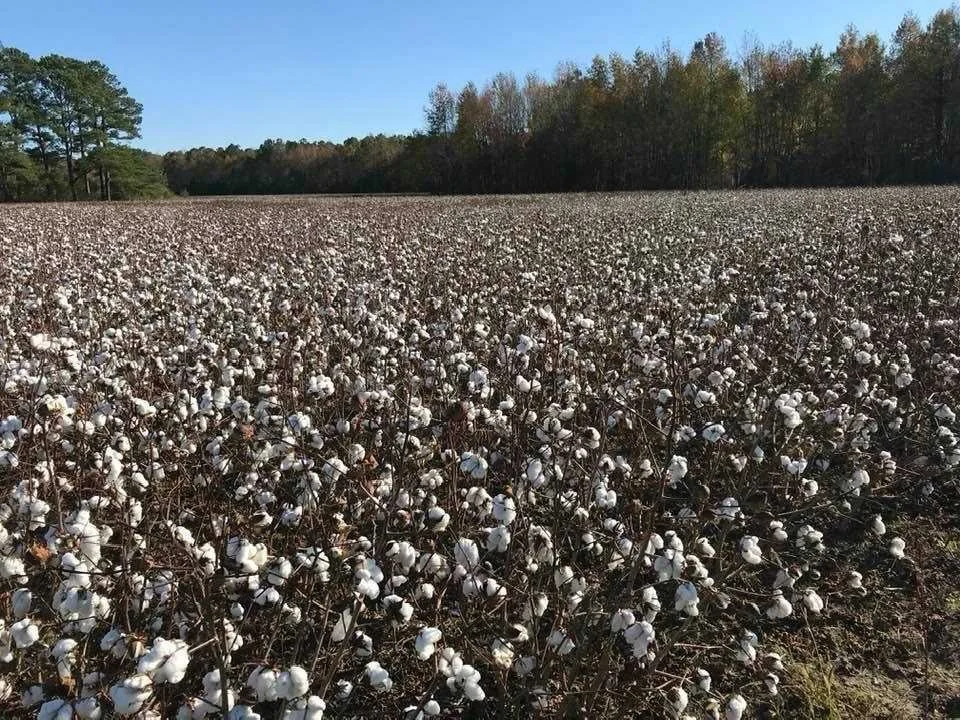
Cotton growing on the family land in Sardis, South Carolina.
As sharecroppers, they moved from place to place working on land always owned by legacy white property-owning families. It was a hard job.
But that changed when they moved to the tiny town of Sardis in the late 1930s – when our family began working for themselves on about 500 acres.
The origin of how it was acquired has always been the topic of family folklore.
My grandmother told me that the family who owned it deeded the parcel to us because they couldn’t pay us. My great-uncle said we were given the land because my great-grandfather, Mack White, purchased the parcel from the original landowners. Other family elders claim we acquired the large assemblage of property to grow test crops for the government. But nonetheless, it was ours — a rarity in the Jim Crow South and a sign of wealth for Black families in the country.
But holding on to the land was never easy.
Whatever was grown on the property was sold — usually for much less because the items sold were grown by Black farmers. Much of the money collected was used to pay taxes on the property, which were assessed at higher rates than those of white property owners because county assessors were working with white land prospectors to foreclose and take land from Black farmers.
Ultimately, if those tactics failed, the white Citizens Councils resorted to intimidation, with member businesses refusing to extend Black farmers store credit or banishing them from shopping at the store altogether. The county would send inspectors who used ordinances — some predating the Civil War — to ticket and fine my great-grandfather for unfounded and mundane offenses.
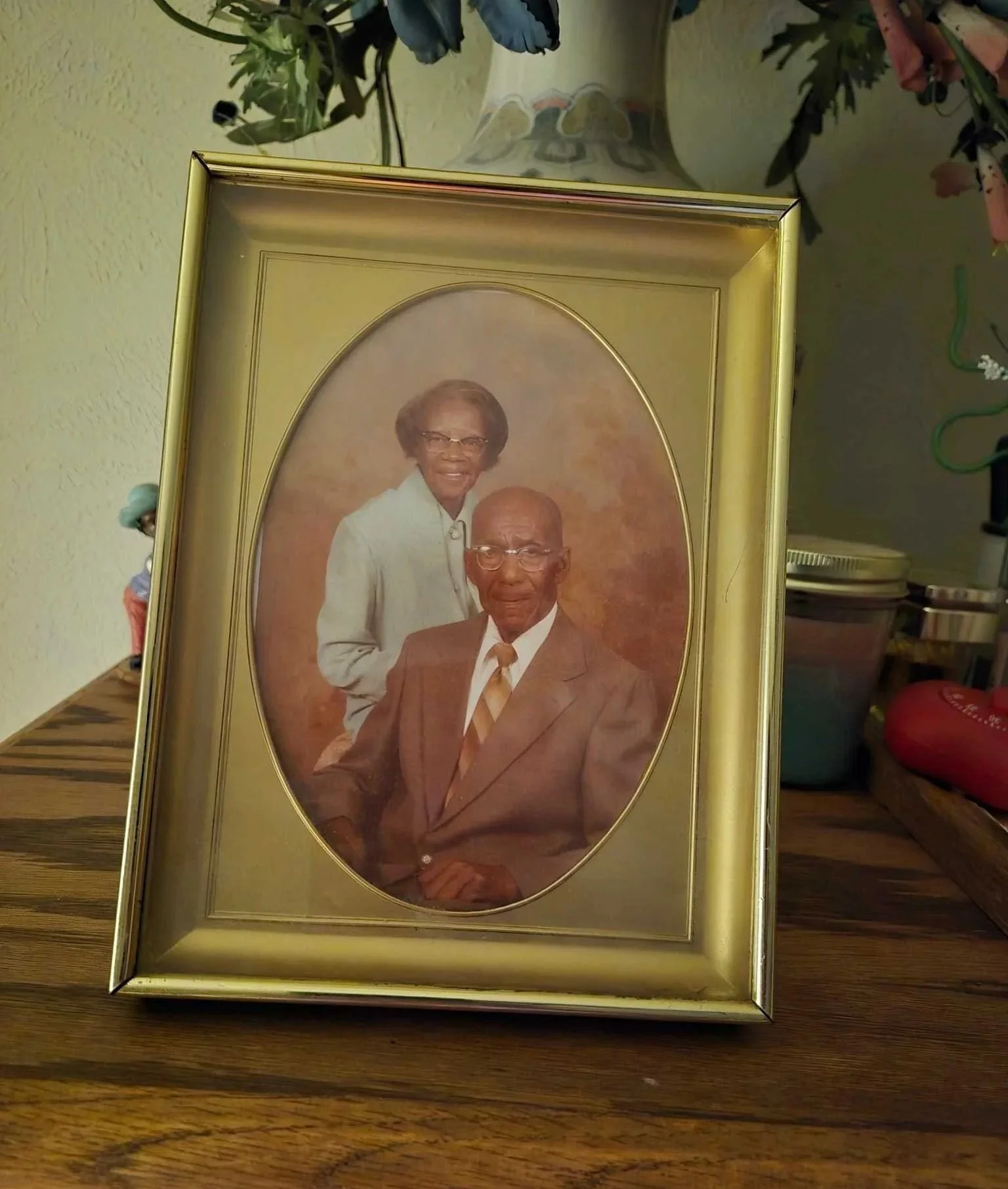
My great-grandparents Mack and Mary White.
Then, one dark October night, my grandmother recalled seeing a “trail of lights” approaching their tiny three-bedroom house. My great-grandmother, Mary White, hustled the children into the back room, while my great-grandfather and great-uncle grabbed their shotguns, for they knew who was coming — the Ku Klux Klan.
There were approximately 20 of them, all on horseback, all with lit torches and in full KKK garb. Outnumbered and more than likely outgunned, I always asked my great-uncle if he was scared, since he was 14 at the time. He told me no, because my great-grandfather wasn’t.
“Fear no man or his evils,” he would tell me — words I still live by to this day.
With no telephone, the remaining children slipped out a back window and hustled quietly to nearby family members, telling them of the Klan. Within minutes, family members and friends arrived by the dozen with guns drawn, including a few Lumbee Indians who used to sharecrop with our family and had become friends.
Once in place, a single shotgun blast filled the dark night sky, as the sons of the formerly enslaved and Native Americans — who were forcibly displaced from their land — banded together to ensure another injustice was not carried out.
The Klan retreated hastily, never to return.
As my great-grandfather’s children got older, they could never shake the night the Klan paid them a visit. It was a night that still haunts my grandmother.
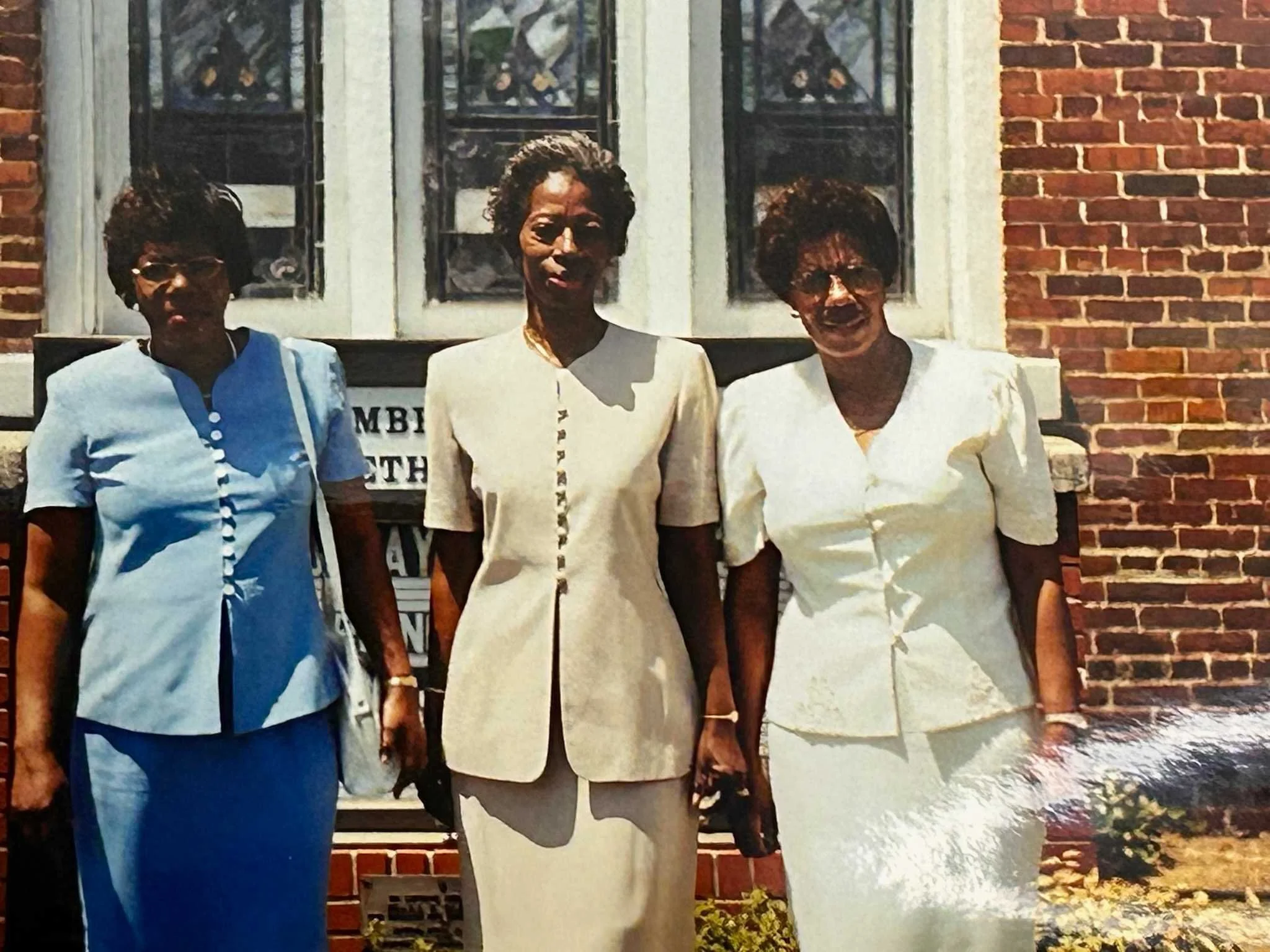
My grandmother (left) returned to South Carolina to bring her two sisters to NYC: Janice (center) and Earnestine Scott (right). Photo taken in 1994 at Cumberland United Methodist Church in Florence, South Carolina.
After graduating high school, she, like many Black people in the South, moved North during the Great Migration — eventually landing in New York City. As her sisters graduated from high school, she came to bring some of them north, where they would eventually start their own families and careers. Most of the men stayed in South Carolina, where they, too, started their own families and found jobs in town, leaving very little time to help with the farm.
Eventually, as my great-grandparents, Mack and Mary White, grew older and their children made their own lives, they abandoned farming the land and moved to Florence in the 1960s.
Still, they knew what they had, and they did everything in their power to keep it. For years, the land sat as a relic of the Old South, with dilapidated tobacco barns and large canopies of southern pine trees that would sway like gallows.
But as the Civil Rights Movement raged on, a rarely discussed economic change was also taking shape in South Carolina.
As the rate of Black Americans moving North accelerated, many of the South’s laborious agricultural industries were languishing. Fields where sharecropping families picked tobacco and cotton were shrinking — forcing many with low education and job skills to move to area towns and cities like Florence, Darlington, Sumter, and Columbia in search of better job opportunities.
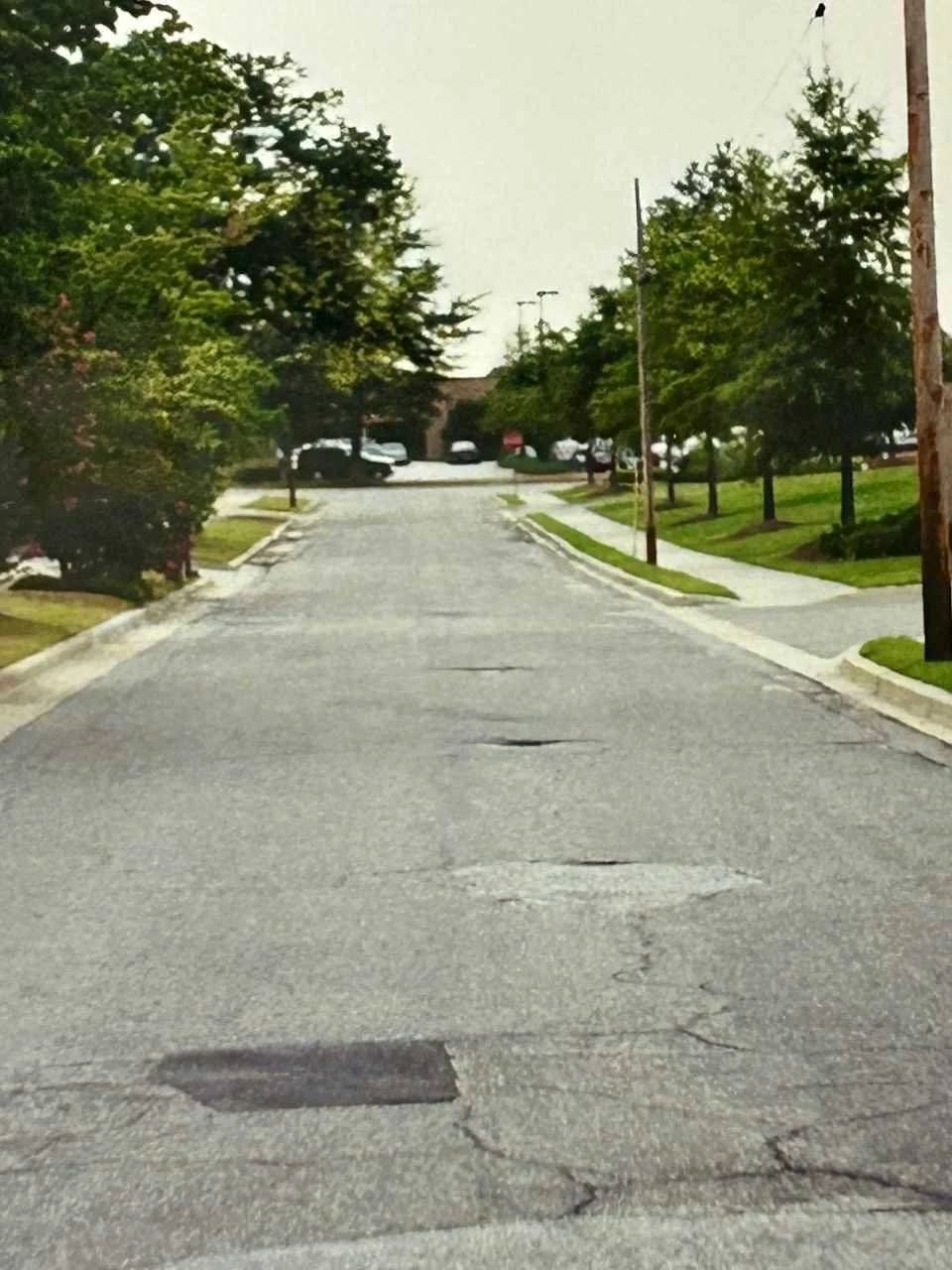
Taken about 25 years ago, this photo shows McFarland Street in Florence, South Carolina, where my mother grew up, raised by my great-grandparents Mack and Mary White. They moved there in 1967, and lost the property to eminent domain in 1996. The house was demolished to make way for a hospital expansion, and the entire street is now a parking lot.
As a result, Southern states launched a business recruitment plan, incentivizing large manufacturers from Northern states to set up shop and relocate to South Carolina — promising no unions, a lower cost of living, lax environmental controls, and publicly funded job training. Several companies took the bait.
However, these companies needed land to make their facilities a reality.
Family members were bombarded with letters, calls, even front porch visits by people promising to make us rich — if we only signed part, or all, of our property to developers.
Smoking a pipe while drinking a cup of black coffee on the front porch, my great-uncles said my great-grandfather kindly told them, “No thank you,” politely asking them to stop disturbing him from, more than likely, reading the Florence Morning News from cover to cover.
My great-grandparents, grandparents, aunts, and uncles knew there could be no dollar amount attached to our property that would make it worth selling.
But as time went by, sadly, slivers of the property were divided and sold – some even lost to foreclosure once subdivided, and later auctioned off. By the death of my great-grandmother in 1995, what had been 500 acres was down to 345 acres, as family members who were trusted to hold on to the land sold parts of it or struggled to keep up with tax payments.
I began referring to the sold property as the “lost land” as I got older, after remaining family members were able to maintain the balance.
However, while lost, it, too, told a story.
Between 1865 and 1919, Black Americans amassed 15 million acres of land in the South. By 1997, Black farmers lost more than 90% of this acreage through state-sanctioned violence, discriminatory regulatory and banking policies, the denial of federal farm benefits, and predatory sales that limit wealth building. A conservative estimate of the value of lost land is $326 billion.
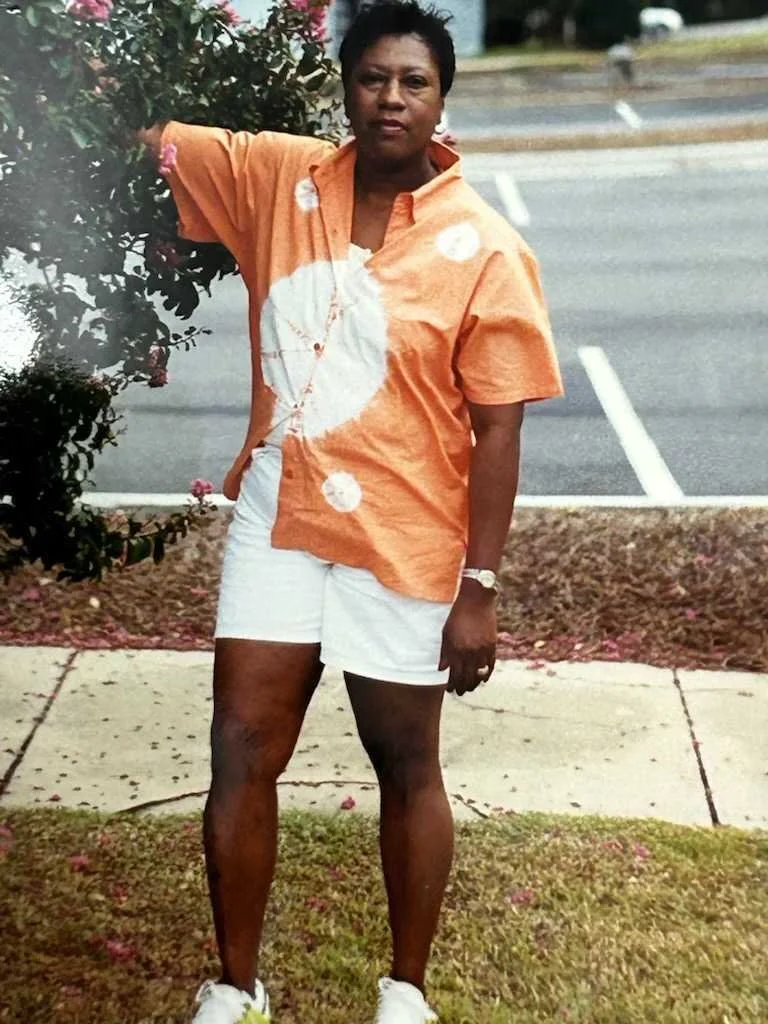
My mother, standing next to a Crepe myrtle tree that my great-grandmother planted in the 80s as a marker for the home they lived in on McFarland Street.
Once a tobacco train stop, Florence continues changing. Modernization brought expansion of two major hospital systems, pharmaceutical manufacturing, distribution hubs, new retail, and many new people. Places that I remembered playing at gave way to sprawling subdivisions, right-of-ways for road projects, and even grave plots for an expanded cemetery.
Throughout the early 90s and early 2000s, a new South was rising right before our eyes, and although it was not legally ours, the land we once owned played a key role in the community’s growth.
Today, the remaining 345 acres are in a conservatorship as part of Florence County’s larger initiative to preserve green space from development and better equip the county for climate resiliency.¹
Some of the happiest moments of my childhood were summers spent playing outside all over our family land — running barefoot through the rows of tobacco while playing hide-and-seek with cousins I hadn’t seen in years, climbing trees to pick juicy muscadine grapes off the vine, wading in the various springs, and finally laying truth to aunt Pearline’s “roots shed,” which would become a source of family gossip for years.
My late great-uncle Willie B. is correct. Land is the greatest storyteller of all time, and for Black people fortunate to have land passed down in their family, there’s always a story to tell that binds you to the soil of your family’s roots.
We as Black people would not be as strong, resilient, and self-reliant had we not been raised and taught by the land, because in all actuality, the land is how we survived for 400 years. From the surfaces of the earth we clothed and fed ourselves, drank and ate from its streams and waterways to sustain, and ultimately carved paths to freedom from the light of the moon.
May your footprints lay a pathway of discovery to untold family history rooted in the land this Black History Month.
¹ Through a landmark protection effort, the Open Space Institute (OSI), together with Florence County, Francis Marion University (FMU), South Carolina Office of Resilience, South Carolina Conservation Bank, Darla Moore Foundation, and a coalition of state and local partners, announced a partnership to secure nearly 8,500 acres for conservation in Florence and Darlington counties. In addition to safeguarding wildlife and providing flood protection, the land will be used as an instructional and recreational site for forestry, environmental science, and environmental studies at FMU.
Editor’s Note
Keeping Land in the Family
When a person dies without a legally binding will or deed to prove ownership, their assets are considered informally owned by their heirs. Property that is informally passed down from generation to generation is often owned “in common” by all the heirs, regardless of whether they live on the land or pay taxes. This is referred to as “heirs’ property,” more commonly known as family land.
The heirs have the right to use the property, but do not have a clear or marketable title because the estate issues remain unresolved. To get legal access to those assets, heirs must go through probate — a process in which the court determines how much the assets are worth, pays debts, and distributes the remaining assets and property to descendants. Because it is divided among multiple heirs, it is among the least stable forms of homeownership and a major driver of Black Land Loss.
As land continues to be passed down, each generation adds more heirs to the inheritance, creating more challenges. Without proof of ownership, heirs struggle to obtain federal benefits for farms, secure loans, receive disaster relief, and access other USDA programs. In the worst-case scenario, the court may order a partition sale through a third party — a process when a property cannot be physically divided, all heirs are forced to sell. This is common in cities, and something we’ve witnessed in Richmond.
Heirs’ property can be an issue for any family, but it disproportionately impacts middle- and low-income families without access to legal services to protect their property rights. Black communities, especially in the rural South, have lost land because of a lack of a will or estate plan, something many families would not have done after inheriting or purchasing land due to exclusionary laws, misinformation, lack of education, and violence. Heirs’ property remains the leading cause of Black involuntary land loss.
In 2020, Virginia passed a law to help prevent the involuntary loss of family land by incorporating provisions of the Uniform Partition of Heirs Property Act, changing how partition sales occur.
As Richmond continues to grow and updates the city’s zoning code through Code Refresh, consider what is needed to keep people in their homes, the investments in repair and weatherization, and the policies that will protect Black families from displacement.
View these resources to learn more about heirs’ property and receive assistance in Virginia: