How Community-Based Partnerships Can Foster Resilience through Urban Greening
By Nicole Roemer, guest blogger, Master of Urban and Regional Planning
I recently completed a master’s degree in Urban and Regional Planning at VCU with a focus on environmental planning. Sustainable and resilient community development has always been my passion. So, for my capstone, I worked with Southside ReLeaf to identify priority areas and develop recommendations for projects and policies that build resilience through urban greening. In this context, resilience means helping neighborhoods better withstand and recover from flooding, extreme heat, and other climate-related challenges while improving everyday quality of life.
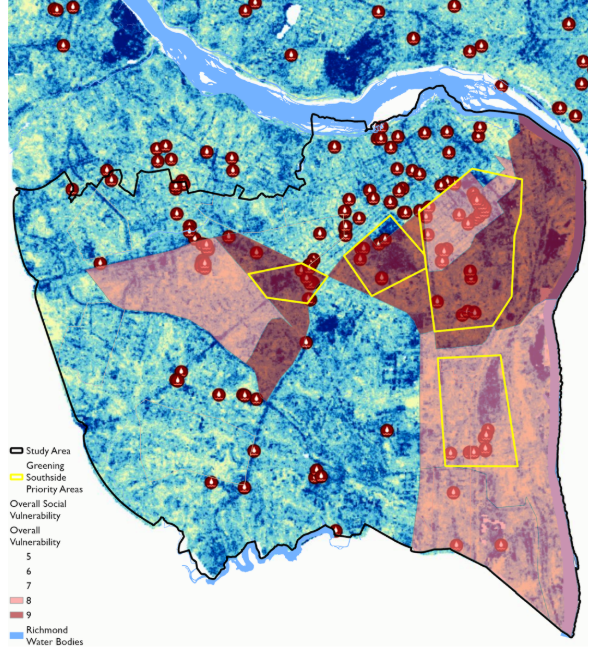
This map combines social vulnerability data from Richmond 300, flood modeling from the University of Richmond, and community science flooding observations collected through Southside ReLeaf’s Go With the Flow project. The areas outlined in yellow represent neighborhoods where these vulnerabilities overlap and where urban greening efforts may have the greatest impact.
Southside Richmond residents are more vulnerable and less able to adapt to climate change, largely because of environmental racism. This makes Southside residents more likely to experience heat-related and respiratory illnesses, higher energy bills, housing insecurity, and the impacts of extreme weather. Urban greening can help address these challenges by planting and preserving trees, expanding access to parks and open spaces, restoring natural areas, and using green infrastructure to reduce flooding and extreme heat.
While the City of Richmond has adopted and amended several citywide and small-area plans that support urban greening and resilience, community-based organizations (CBOs) often struggle to find a through-line among evolving community needs, city priorities, and financial and capacity constraints.
My capstone, the Southside Greening Plan, synthesizes city plans, institutional dynamics, and existing conditions to analyze emerging patterns in urban greening. By identifying priority areas, Southside ReLeaf can focus programming on high-opportunity projects and initiatives that alleviate flooding and heat, increase equitable access to green spaces, and strengthen community education and relationships with the City of Richmond.
Three main questions guided my research:
What are the priority areas in Southside to address flooding, extreme heat, and/or access to green spaces?
How are city officials and residents currently prioritizing and implementing urban greening initiatives?
What are successful examples of stormwater and heat mitigation strategies that can be adapted to better build resilience in Southside?
Key Findings
To assess priorities for urban greening in Southside Richmond, I interviewed city officials, analyzed existing master plans and spatial data, reviewed community feedback from previous listening sessions, and reviewed successful greening strategies and policies from other communities to identify approaches that could be adapted for Richmond.
Several themes emerged.
Communities drive our priorities.
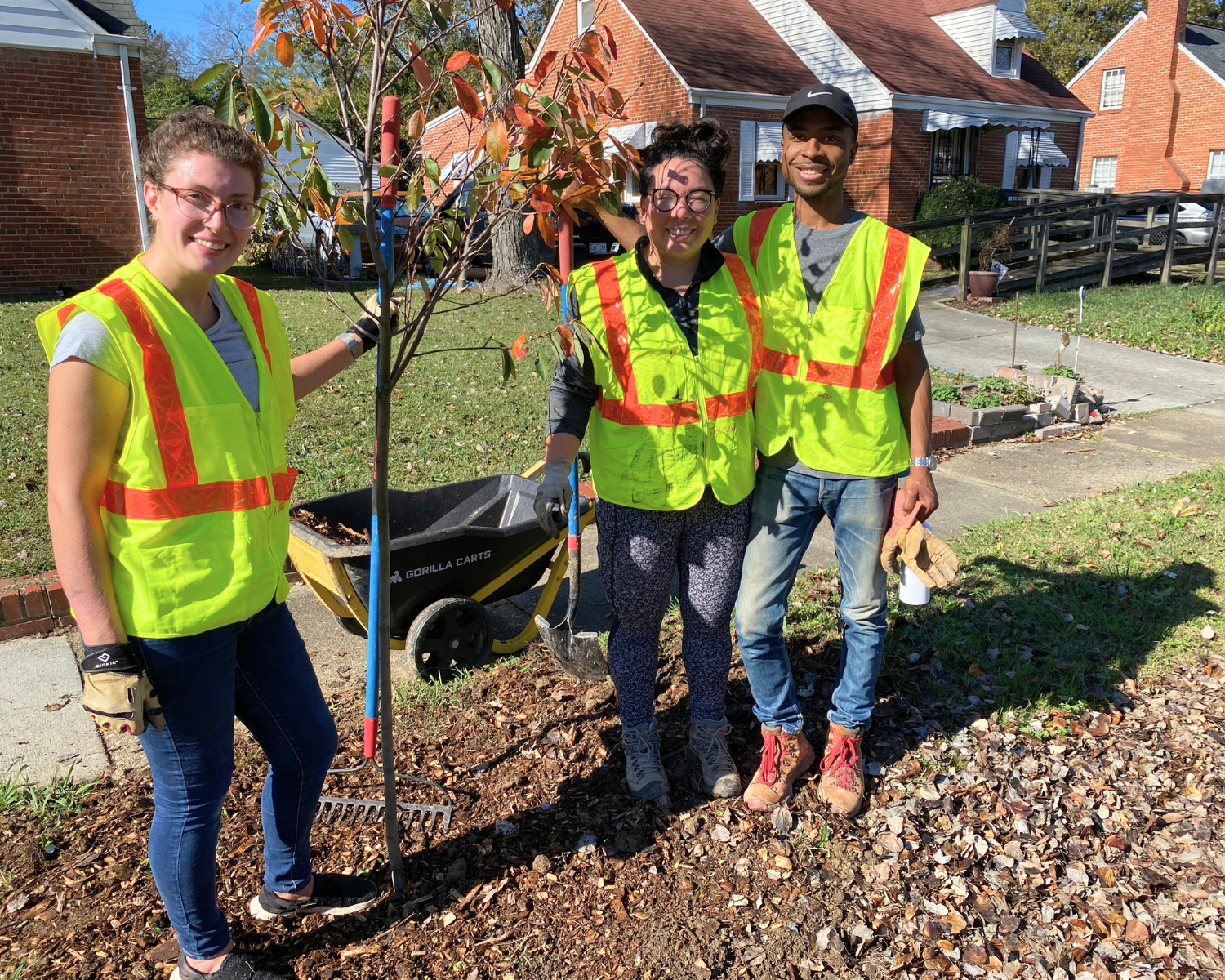
Volunteers pose with a tree they planted in the Davee Gardens neighborhood in the fall of 2022 with Southside ReLeaf. Davee Gardens is located in a Greening Southside Priority Area due to overlapping social vulnerabilities.
While planning often occurs at the city and state levels, community voices determine what matters most on the ground. Stakeholders I spoke with noted that projects are budgeted through a five-year capital improvement plan, but they are usually funded only after years of community advocacy and sometimes only one year at a time.
Additionally, while the City of Richmond has identified Southside as a priority for capital improvements, it is not always clear which areas are targeted or where projects are located — at least not in publicly available plans. As a result, residents, civic groups, and community-based organizations like Southside ReLeaf continue to drive many short- and medium-term greening goals through advocacy, volunteer-powered maintenance, and grant-funded projects.
To successfully advocate for priority greening projects, we need to find ways to connect greening and resilience initiatives with other important community priorities that are often addressed separately, such as public safety, transportation, and affordable housing. Doing so can maximize limited resources, expand funding opportunities, and create broader community benefits.
Existing tools are underutilized.
Richmond has numerous plans that support a more climate-resilient future, including Richmond 300, the RVA Clean Water Plan, and RVAgreen 2050. Currently, Parks, Recreation and Community Facilities is drafting Richmond INSPIRE, while Urban Forestry is developing the city’s first-ever Richmond Tree Plan. However, not all projects and initiatives are publicly shared, and the sheer number of plans and programs can lead organizations and departments to work independently rather than collaboratively.
Greater coordination among nonprofits, community groups, and city departments is needed to avoid duplicating efforts and maximize impact. A more holistic approach requires transparency and community-driven engagement throughout a project's life cycle — from planning and design through implementation and maintenance. Aligning funding, policy, and planning efforts across departments can help distribute community infrastructure more equitably and strengthen neighborhood resilience.
Southside has several areas with recurring vulnerabilities.
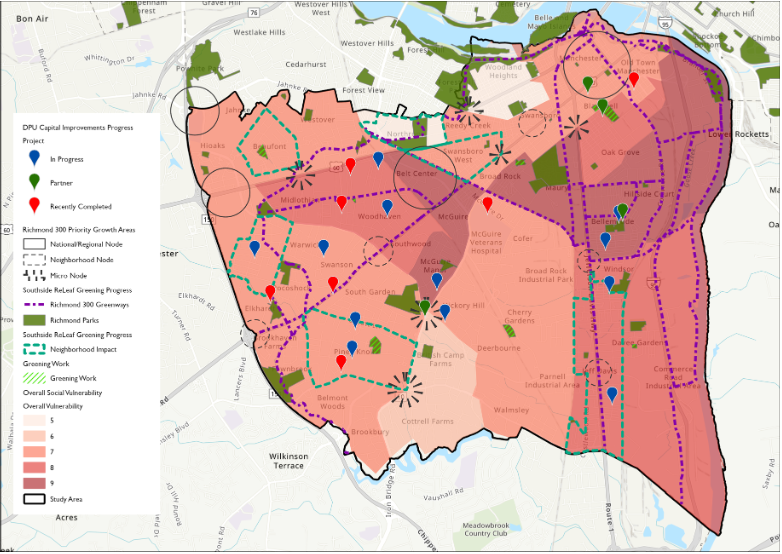
This map compares social vulnerability with current city projects, parks, and greening initiatives across Southside Richmond using data from RVAgreen 2025, the Office of Sustainability, Southside ReLeaf, and RVAH2O. Areas with greater vulnerability and multiple investment opportunities helped inform the priority areas identified in this research.
My analysis identified several Southside neighborhoods that consistently experience environmental challenges, including recurring floods, urban heat islands, disproportionate access to parks and green spaces, and a lack of tree canopy cover. These include:
Neighborhoods east of Richmond Highway, particularly Oak Grove, Bellemeade, Hillside Court, and Davee Gardens.
Southside Plaza and portions of the Hull Street corridor within Belt Center.
Portions of the Broad Rock and Maury Street neighborhoods.
To identify priority areas, I analyzed geospatial data related to flooding, extreme heat, tree canopy, green space access, and climate equity. By overlaying these datasets and comparing them with planned capital improvement projects, existing parks, and Southside ReLeaf programming, I identified neighborhoods where multiple vulnerabilities overlap. Site visits helped validate patterns observed in the data and provided additional context about existing conditions on the ground.
The overlapping challenges in these priority areas make them places where targeted greening investments could provide the greatest resilience benefits. Many of these areas already have Department of Public Utilities capital improvement projects underway and have been part of Southside ReLeaf’s greening efforts. However, they continue to experience disproportionate environmental burdens and remain less resilient than other parts of the city. This creates an opportunity for the City of Richmond, Southside ReLeaf, and community partners to work together to address long-standing challenges through targeted greening initiatives.
A Path Forward
Taken together, these findings suggest that Southside’s greatest challenge is not a lack of plans, projects, or community interest. Rather, it is the difficulty of coordinating these efforts across organizations, departments, and residents. This realization shaped the recommendations of the Southside Greening Plan.
The recommendations are organized around three connected strategies: strengthening partnerships, advancing supportive policies, and expanding community-led greening projects. Together, these strategies aim to improve coordination among stakeholders while directing resources toward neighborhoods facing the greatest environmental challenges.
Goal 1: Institutionalize partnerships with the City of Richmond.
CBO partnerships are critical to building equitable resilience. However, these partnerships risk falling through the cracks without formal systems that increase transparency and strengthen collaboration between Southside ReLeaf and its partners.
My recommendations include establishing dedicated city liaisons, developing standard operating procedures for collaboration, creating long-term communication and accountability structures, and pursuing formal agreements that can support future grant opportunities. These systems would create an institutional foundation for stakeholders to build momentum around a shared vision while leveraging each partner’s unique strengths and expertise.
Goal 2: Enable policies that revitalize priority areas in Southside.
Advocating for supportive policies will strengthen our collective capacity to build resilience in identified priority areas and to prepare for future challenges as community needs evolve.
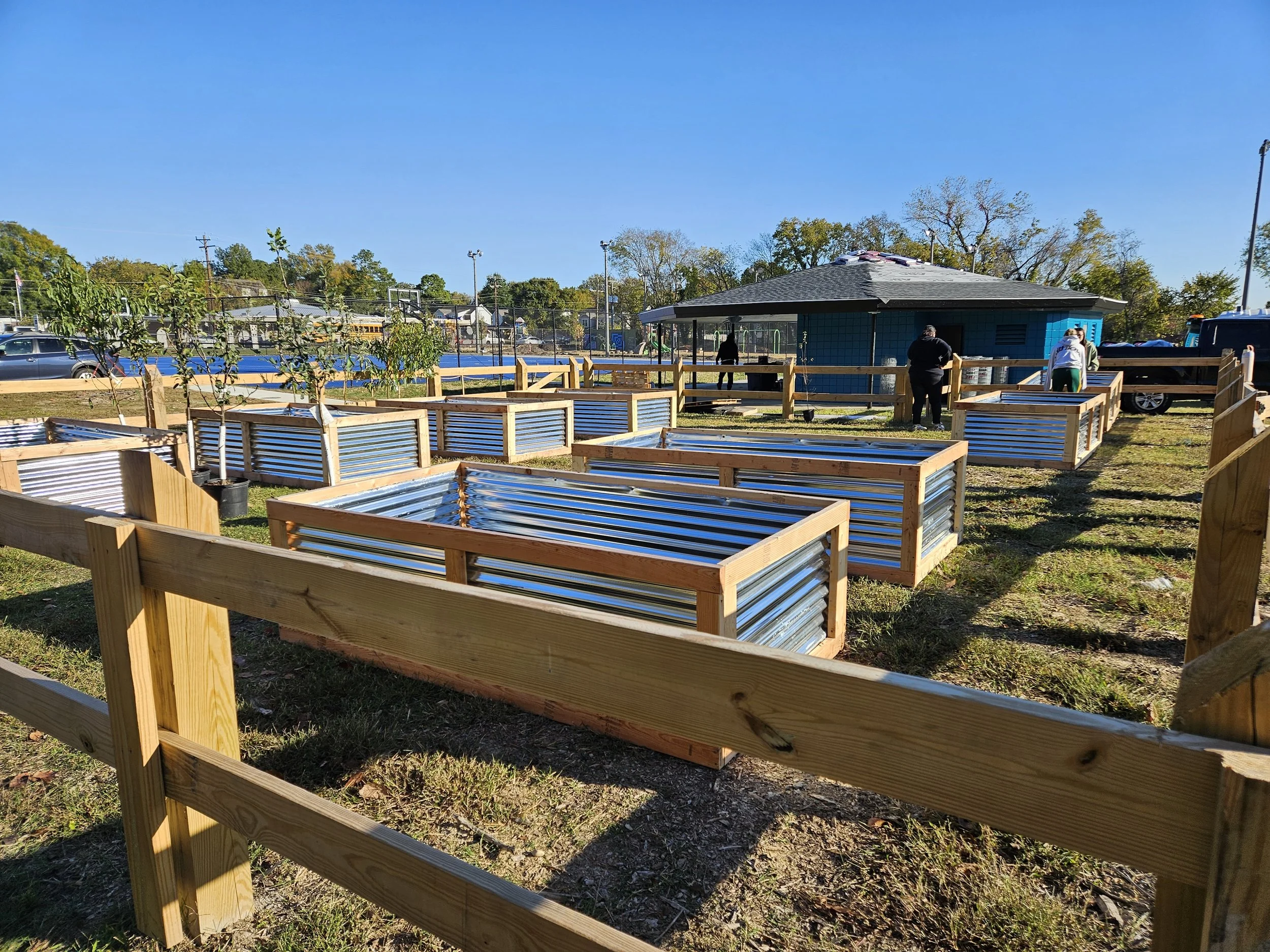
Volunteers move raised garden beds into the new Blackwell Community Garden. The Blackwell Park green upgrades project illustrates how community-led greening can build resilience. By bringing together residents, nonprofits, city agencies, and private-sector partners, the project enhanced Blackwell Park with new green spaces, recreation amenities, and stormwater-friendly environmental improvements that support both community well-being and climate resilience.
Recommendations include creating tools to prioritize future investments, establishing community-informed standards for public spaces, and advancing policies that better connect green infrastructure, stormwater management, and community development goals.
Supporting greening on private property is also an important part of this work. For example, providing assistance with invasive species removal, tree maintenance, or tree planting for residents facing mobility or financial barriers would recognize the varying circumstances of our neighbors while expanding opportunities to improve resilience across the city.
Goal 3: Build resilience through greening.
The final set of recommendations focuses on community-led greening projects that can create both immediate and long-term benefits. These opportunities include targeted cleanup efforts along stormwater corridors, community tree plantings, improved park stewardship, greenway connections between parks and neighborhoods, and creative approaches to greening areas where traditional tree planting may not be feasible.
One theme that emerged throughout my research was the need to think more holistically about community infrastructure. Greening includes preserving and expanding tree canopy and improving open spaces, but it should also include how we manage stormwater and connect neighborhoods through shared public assets.
“Green” and “blue” infrastructure are often discussed separately, but both play important roles in creating resilient communities. Blue spaces include water-based features such as rivers, streams, lakes, ponds, wetlands, and floodplains, and green spaces include vegetated areas such as parks, urban forests, green roofs, green walls, bioswales, and rain gardens. Together, our parks, trees, wetlands, waterways, transportation networks, and public spaces form a system of community infrastructure that is just as essential as access to jobs, housing, and services. To make the most of our greening efforts, community partners need to come together and approach these elements as a whole.
So, What Happens Next?
My research identified several Southside neighborhoods where flooding, extreme heat, limited access to green space, and lower tree canopy overlap. It also revealed that Richmond already has many plans, programs, and community partners working toward resilience goals. The challenge is not a lack of ideas or community commitment, but rather the need for stronger coordination, communication, and long-term partnerships.
The Southside Greening Plan provides a framework for addressing those challenges. By formalizing partnerships, supporting policies that connect resilience goals across sectors, and investing in community-led greening projects, Southside ReLeaf can focus its efforts where they will have the greatest impact.
The heart of every city is its people. Across Richmond, community groups are already doing incredible work to improve the quality of life for their neighbors. In fact, local government relies on CBOs for their work and advocacy. Stronger partnerships, supported with dedicated funding and shared goals, can help ensure that work is sustained and expanded. Through increased collaboration, communication, and transparency among nonprofit, public, and private partners, Southside ReLeaf can continue to create and steward shared green spaces, strengthen community resilience, and build healthier futures for South Richmond residents.