
Part I: The Geography of Belonging: Who is Our Neighbor?
By Casey Overton, guest blogger, Richmond Zoning Advisory Council Member
Series Introduction
The places we call home are shaped by policies and investments we choose to prioritize. Richmond's zoning code shapes where people can live, how neighborhoods grow over time, and who has access to opportunity. Yet the city's zoning ordinance has remained largely unchanged for more than 50 years, reflecting broader planning and infrastructure systems that have also struggled to keep pace with the city's changing population, economy, and housing needs.
As the city continues to work on the next draft of Code Refresh, Southside ReLeaf is asking our neighbors a fundamental question: “What kind of community are we trying to build?”
To help explore this question, we invited partners who advocate for housing affordability to guest-author a three-part series examining the relationship between housing and zoning in Richmond.
In Part I of the series, Casey Overton – a member of Richmond’s Zoning Advisory Council – details how zoning serves as a powerful tool for shaping neighborhoods and explains why conversations about density are ultimately about belonging.
The History of Placemaking
When I joined the Zoning Advisory Council, I did so with concern that land use might not capture much public interest. This was only half-true. At the center of much of our Code Refresh conversation lies the “density” debate. Where we allow new development to occur determines whom Richmond welcomes and whom it rejects.
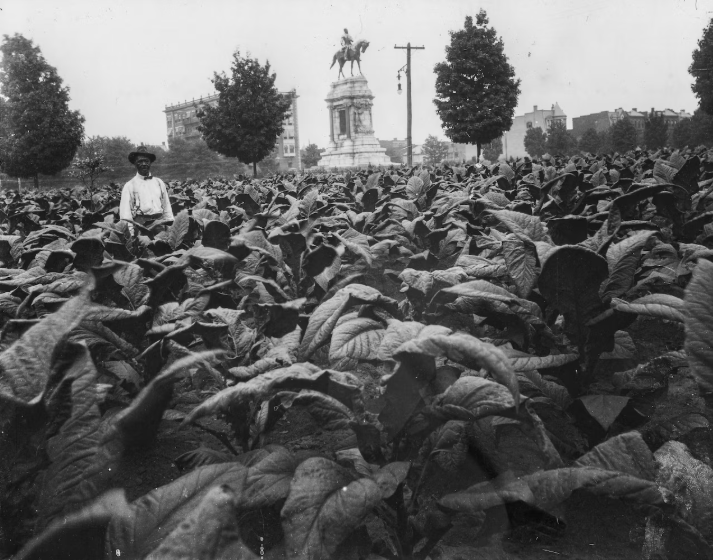
Photograph dating to between 1917 and 1919 of a Black man standing in a tobacco field planted on Monument Avenue, with the Robert E. Lee monument looming large in the background. Richmond passed a racial zoning ordinance in 1911 that designated certain neighborhoods for white or “colored” residents.
What we imprint into ordinance in the present calls forth whatever future we imagined for our community. Herein lies the problem – your imagined future can simultaneously be your own paradise and someone else’s apocalypse. Unfortunately, forces of disparity and death have infected the design of our dwelling place, such that we must redesign those aspects we hope to free from the depravity of selective flourishing.
Zoning is a tool. In a 2001 article titled “Zoning Basics,” Michael Chandler and Gregory Dale define zoning as “a legislative process through which the local governing body (under power delegated [to] it by the state zoning enabling law) divides the municipality into districts or zones, and adopts regulations concerning the use of land and the placement, spacing, and size of buildings.” Done well, zoning establishes consistent land-use patterns that determine what can be built and where, minimizing disruptive development and avoiding incompatible land uses.
We get the word “zone” from a Latin adaptation (zōna) of the ancient Greek zṓnnumi, the original root verb meaning to tie or fasten. Zoning policy recalls the act of fastening, binding land-use categories into place. At best, it bestows order. At worst, this is confinement – restriction from natural movement or migration. Richmond’s zoning code has been bound in place for over half a century.
When zoning was introduced in the early 20th century, one of its primary goals was to protect residential neighborhoods. Factories often sat next to homes, posing significant hazards and health risks, such as exposure to smoke, noise, odors, and potential fires – a frequent occurrence during the rapid industrialization of manufacturing. From a public safety perspective, separating residential and industrial zones is a practical response.
However, zoning also became a tool for discrimination and exclusion. Several Southern cities, including Richmond, Va., adopted ordinances that prohibited Black residents from moving into certain neighborhoods to enforce racial segregation.
After the U.S. Supreme Court ruled that Louisville’s racial zoning ordinance was unconstitutional in Buchanan v. Warley (1917), localities increasingly used “race-neutral” regulations such as single-family zoning, lot sizes, setbacks, and restrictive covenants to achieve outcomes that segregated families by race. Before redlining was introduced by the federal government in the 1930s, zoning had become an exclusionary tool for shaping who could live in different neighborhoods.
The Color Line – Who is Our Neighbor?
One of the earliest examples of single-family zoning as an exclusionary tool emerged in Berkeley, Ca., in 1916. A real estate developer, who was also an architect of racial antagonism via deed covenants, successfully advocated to keep Japanese- and Chinese-owned laundries and a Black-owned dance hall out of white neighborhoods, supposedly to preserve a higher market value. After he achieved this restriction, Asian, Black, and immigrant residents were forced to live in overcrowded neighborhoods – creating a haven for white and wealthy families.
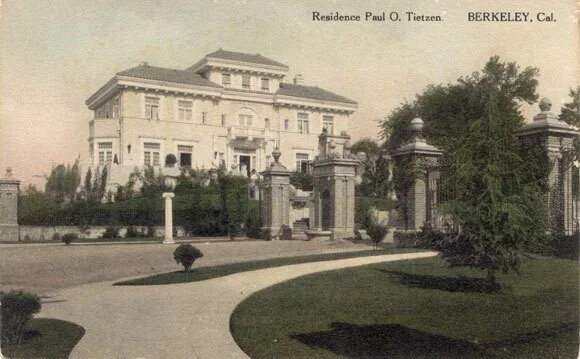
The gated entrance to the Claremont neighborhood in Berkeley, Ca., which had racial covenants that barred homeowners from selling or renting their homes to people of color. Berkeley was one of the first cities to use single-family zoning as a tool of exclusion.
While California is not Virginia, despite sharing a city name, the widespread effect of single-family zoning made its way to Richmond, Va. A McGuire Woods report, Zoning and Segregation in Virginia: Part 1, states, “In most cases, a minority household could not afford to purchase a house on a large lot and was forced to live in a concentrated neighborhood of higher density.”
The legacy of exclusionary zoning continues to shape housing patterns today, and debates over density, especially within single-family areas, must be examined within that historical context. At its core, this is a discussion about access, belonging, and opportunities for generational wealth-building.
The original racialization of zoning law in this nation did not end when explicitly racial ordinances were deemed unconstitutional, and is now highly resistant to remedies needed for true reconciliation. On the surface, concerns about increasing density may reflect genuine concerns about congestion, infrastructure, and change. However, density opposition often functions as a dog whistle to preserve a neighborhood’s “character” – which translates to excluding renters, people of color, working-class families, and newcomers.
I must ask, what values are our zoning decisions protecting today?
The Cost of Exclusionary Zoning
The rise of single-family zoning created a culture that empowered homeowners to expect an inordinate level of control over their surroundings. This goes beyond shaping the physical landscape of their neighborhoods, but who has the authority to determine what belongs there?
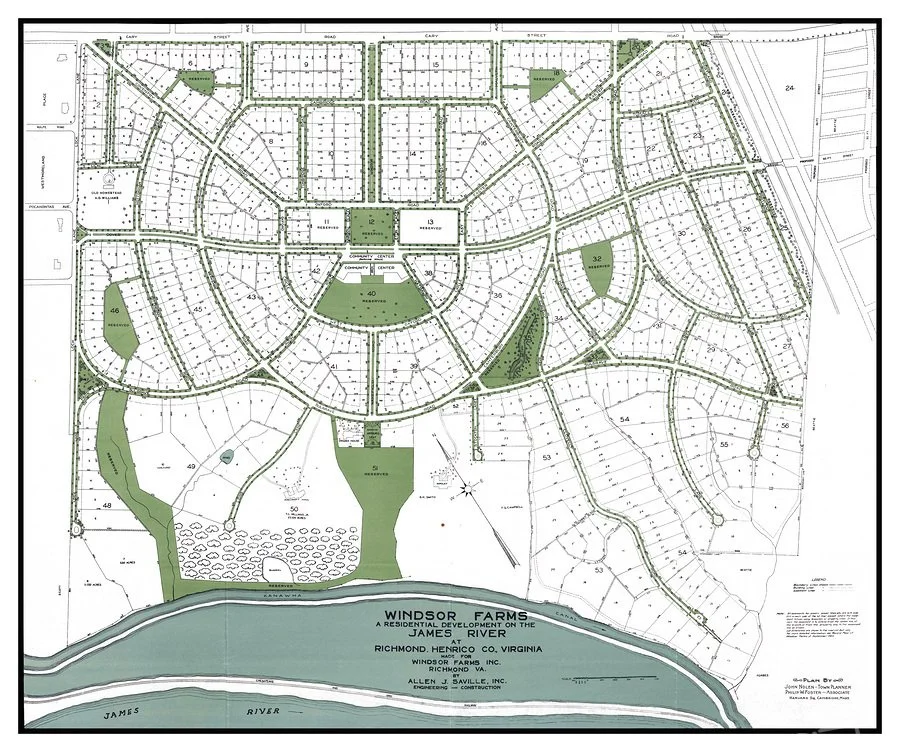
Racially restrictive covenants were written into the original land purchase agreements for Richmond’s Windsor Farms neighborhood in the 1930s. Those covenants ceased to be legally enforceable in 1948, when the Supreme Court ruled in Shelley v. Kraemer that racially restrictive covenants violated the Fourteenth Amendment. They were deemed illegal with the passage of the federal Fair Housing Act in 1968.
At their most anxious, many homeowners are adamant in maintaining control over character (often a euphemism for lot size), sunlight, views, and parking availability. An increase in density is a loss of control, which is the landowner’s most prized currency – the ability to shape their immediate surroundings. However, we enter dangerous territory when those preferences are treated as more legitimate than the desires and needs of other Richmonders. The justification to preserve a neighborhood’s character results in restrictions, exclusionary practices, and deference to homeowners as having the only voice in the city, perpetuating patterns of racist policies and unequal access.
The centrality of their own experience becomes manifest destiny, quietly disenfranchising anyone gasping for a home beyond the neighborhood myopia. From a history of private restrictive covenants that enforced racial segregation, residents of historic single-family neighborhoods remain resistant to flexibilities that would open access to a wider diversity of home types, incomes, and, implicitly, people.
The Virginia Defender outlined the impacts of racism in a 2021 editorial linking the declining Black population of the city to our ongoing housing crisis. When the article was published, Richmond experienced the end of a 50-year period as a majority-Black city.
Delaney Jooris of the Defender writes, “And, contrary to what the word might imply, the crisis has been largely manufactured, and its effects haven’t been evenly distributed across our city’s population. Black and poor Richmonders are being priced out of the city limits, which has major implications for the city’s political balance of power.”
An inflexibility in the zoning code that resists density, while not the sole cause, contributes to a future for Richmond that is not only discordant with Black flourishing here but also dashes the hopes of Richmond’s younger residents, who also favor flexibility in the zoning code.
According to the Code Refresh Proposed Zoning District Survey Analysis, of residents interested in Mixed Use, Commercial, or Industrial zoning in their neighborhoods:
Respondents aged 18–24 (1.6% of all survey respondents) accounted for 16% of interest.
Respondents aged 25–44 (38% of all survey respondents) accounted for over 60% of interest.
Respondents aged 45–64 (32% of survey respondents) accounted for only 16% of interest.
Seniors 65+ (28% of survey respondents) accounted for just 5% of interest.
To summarize, a desire for zoning flexibility follows age. I’ve observed this correlation in public comments, where younger commenters tend to support greater density and flexibility. Those concerned about density and increases in use tend to be older.
Who should decide our future – the residents who inherited the city we have, or the generations who will inherit the city we build?
We Decide the Ending
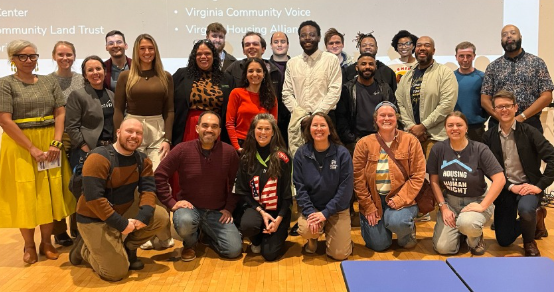
Group photo of some of the partners who are part of Homes for All Our Neighbors at a Code Refresh listening session event for Southside residents.
An abounding love for the City of Richmond has birthed a coalition of housing justice advocates and 24 local organizations called Homes for All Our Neighbors, imagining a Richmond that offers a diversity of housing types with affordable housing in every neighborhood. Our platform is just the beginning of an equitable vision for our home.
In the aforementioned McGuire Woods report, Zoning and Segregation in Virginia, “Incentivizing missing middle housing in single-family zoning districts in particular can create more affordable housing options, address segregation and inequality, and moderate overall housing costs. Ultimately, housing is a racial justice issue, and exclusionary zoning practices have had a significant impact on wealth and racial inequity.”
This reality informs a large part of our platform, but as a coalition, we know that zoning reform is no panacea, so we are collaborating on a strategy for Code Refresh and beyond, including strategies for anti-displacement and affordability. Among my priorities is protecting my neighbors whose families, across generations, have made this city one I’m proud to call home.
Rather than a request or plea, consider this an invitation: imagine what Richmond can become. A fearful response to increasing density is a byproduct of stunted, exhaust-clouded imaginations.
Consider this moment a prophecy – not of inevitable decline, but of possibility.
The profit-obsessed principalities that have robbed so many of us of common wealth and real equity do not have to be the end of our story.
I represent a future for Richmond that embraces intimacy and proximity to our community as a lucrative, reconciliatory imperative, even as it requires compromise and the fierce protection of our vulnerable neighbors. The new Richmond may not look like the home of your forefathers. Our new dwellings might have more rooms for children, artists, activists, coming-of-agers, river-gazers, elders, and lovers.
Make wiser investments.