Growing Richmond Without Losing Its Roots
Southside ReLeaf policy update on Code Refresh Draft Three
By Kami Blatt, Policy Support Specialist at Southside ReLeaf
Richmond is rewriting the zoning rules that will shape where and how the city grows. Richmond 300, the city’s master plan, identifies rewriting the zoning ordinance as one of the City’s six Big Moves. The plan describes the zoning ordinance as a primary tool for implementing Richmond’s adopted growth vision.
For Southside communities, the stakes are especially high. Richmond 300 calls for increasing citywide tree canopy from 42% to 60%, achieving 30% canopy in every neighborhood — prioritizing neighborhoods with high heat vulnerability. A 2017 community heat mapping project recorded a difference of approximately 16 degrees Fahrenheit between Richmond’s warmest and coolest locations during the hottest part of the day.
A citywide code should work everywhere, while public investment should prioritize neighborhoods experiencing the greatest canopy deficits.
Tree Canopy in Draft Three
Code Refresh Draft Three includes tree canopy minimums for new construction and presents tree protection and green space as part of the City’s goal of becoming more sustainable. The latest draft addresses tree preservation and replacement in several important ways:
Existing tree preservation receives credit rather than treating preservation and new planting as equivalent.
New construction requires tree canopy across the development site. This is an important shift from requirements focused primarily on parking lots.
Projects that use existing trees to meet the requirement must provide a tree protection plan prepared by a certified arborist. We see this as an important accountability measure.
Parking lot landscaping is designed to support stormwater management, including requiring parking lot islands to sit below the surrounding pavement so runoff can drain into them.
Southside ReLeaf supports the direction of this zoning update. This is not a choice between housing and trees. Richmond needs more housing choices, walkable neighborhoods, and development near transit. Our urban forest is also essential infrastructure for thriving communities — providing benefits that reach beyond individual properties into the streets people travel, the air we breathe, and the places where families live and gather.
Smart zoning can advance housing and environmental goals at the same time, increasing affordable housing stock in neighborhoods with the direct services, amenities, and green infrastructure needed for enjoyable living. The shade, cleaner air, stormwater mitigation, and relief from extreme heat saves money on energy costs, personal health care, and property damage.
We believe the final code must be clearer and stronger if Richmond wants new development to contribute to long-term canopy growth. The question is whether the final rules will make tree preservation and long-term canopy a meaningful part of development.
We’ve identified several opportunities to strengthen the draft and ensure its canopy requirements deliver meaningful, lasting benefits.
Tree Canopy Requirements in Site Plans
Draft Three ties its tree canopy requirement to site plan review. This means a tree canopy assessment will only occur when there is “business or industrial activity or at least five residential units, and it lists final site plan triggers such as disturbing 4,000 square feet of land or 2,500 square feet within a designated Chesapeake Bay Preservation Area.”
When a project meets the minimum development threshold listed above, an ISA Certified Arborist must prepare a tree conservation plan to protect existing trees at least six inches in diameter that count toward the canopy standard.
However, these provisions do not clearly establish how tree canopy and tree preservation standards apply to projects with fewer than five homes that disturb land or remove established trees. A project does not need to include five homes to significantly impact existing canopy.
Southside ReLeaf recommends:
Tying tree preservation and canopy requirements to the amount of land cleared or disturbed — not simply the number of homes proposed. Projects that exceed a defined disturbance threshold should be subject to tree surveys, canopy assessments, and preservation requirements regardless of whether they include one home or 100.
Establishing a clear disturbance threshold and explicitly applying it to one- to four-home projects. Small-scale development can result in significant mature tree loss, particularly when established trees are removed to accommodate buildings, driveways, utilities, or other site improvements.
Requiring applicants to evaluate feasible tree-preservation alternatives as part of the application. Applicants should explain why removal of healthy, established trees is necessary and demonstrate whether site design can be adjusted to retain significant existing trees. Where preservation is not feasible, applicants should also evaluate opportunities to incorporate green infrastructure that supports stormwater best management practices.
Creating incentives for preservation beyond the minimum requirement. Applicants who demonstrate meaningful preservation of healthy, established canopy should be eligible for appropriate development incentives, encouraging site design that retains trees rather than treating replacement planting as the default solution.
Preservation First, Replacement Second, as Richmond Adds New Homes
More homes near transit, jobs, and services can help Richmond grow. Draft Three allows a portion of a site's on-site canopy requirement to be met through off-site tree banking or a fee-in-lieu payment to a Tree Fund if the Zoning Administrator finds that meeting the on-site requirement is not feasible.
Southside ReLeaf supports this flexibility, but the zoning code should reinforce — not undermine — a preservation-first approach. To avoid new homes and streets with less shade and increased stormwater risk, site design should maximize the preservation of existing trees and prioritize on-site planting to the greatest extent reasonably practicable. Maximize does not mean preserve everything. It means making meaningful efforts to retain healthy, established trees and tree stands before relying on replacement or off-site mitigation.
When on-site preservation and planting cannot reasonably meet the canopy requirement, tree banking or a fee-in-lieu payment to the Tree Fund can provide a mitigation mechanism.
Additionally, Draft Three counts existing on-site trees at least six inches in diameter toward its canopy requirement and requires an arborist-prepared conservation plan to protect them during construction. However, Section § 4.5.1.D lowers the minimum canopy requirement by two percentage points when existing trees alone meet it across residential district zoning types, such as 20% to 18%, 15% to 13%, and 10% to 8%.
We are unsure why the minimum is reduced and are awaiting a response from the City.
Southside ReLeaf recommends:
Requiring qualified professional consultation during site planning for applications involving development or land-disturbing activity by an ISA Arborist, professional landscaper, horticulturalist, or credentialed vendor approved by the City in the planning and design of any development or land-disturbing activity.
Requiring a preservation analysis when tree removal is proposed. The applicant should demonstrate that alternatives were considered and explain why the preservation of tree stands isn't practical (e.g., building configuration, utilities, roads). Applicants should also propose alternative vegetative options and opportunities to incorporate green infrastructure solutions that support stormwater management.
Establishing a preservation-first, replacement-second framework in the zoning code. Replacement or mitigation should not substitute for conservation when existing trees can reasonably be saved.
Identifying the authority responsible for establishing clear guidelines on administering the City’s Tree Fund, including how the fee rate is set and updated, where funds will be directed for use in the City of Richmond, when funds must be spent, and how the public can track results.
Leverage existing state tree-preservation standards in “C-SSM-01 Tree Preservation and Protection” in Virginia Stormwater Management Handbook v1.2, including provisions addressing stands of trees and individual trees impacted during construction.
Virginia’s Tree Conservation Workgroup, where Sheri Shannon serves as an official member, will issue a final report in November with final recommendations for HB549. We look forward to unveiling those standards this fall ahead of the 2027 General Assembly session.
Incorporate Trees as Part of the Vegetation Requirement
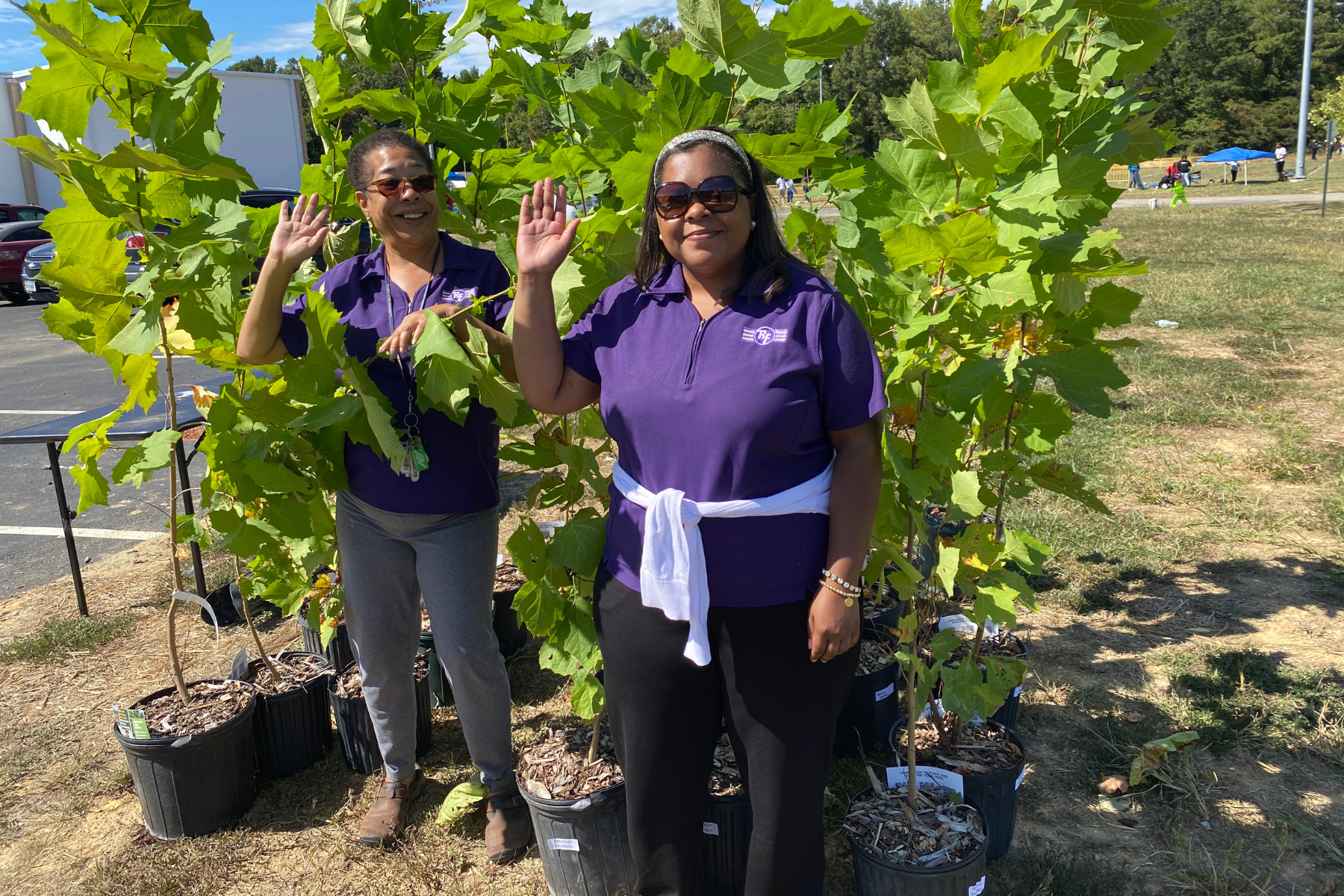
Draft Three’s citywide vegetation standard is intended to conserve natural features, support cleaner air, filter and infiltrate water, reduce flooding, and provide shade. However, if the standard can be satisfied entirely with turfgrass or other low-growing plants, it will not necessarily produce meaningful shade or tree canopy.
Southside ReLeaf recommends
Requiring a defined portion of the vegetation standard to be met through tree canopy. The code should allow reasonable flexibility where overhead utilities, small lots, or other physical constraints make tree planting impractical.
Give Heritage, Champion, and Older Specimen Trees Stronger Protections
A newly planted sapling is not an immediate substitute for a large, healthy tree. Established trees provide substantial shade, stormwater interception, carbon storage, habitat, and other community benefits. They also have cultural and historical significance.
Virginia law permits local ordinances to provide tree cover credit for preserving trees of outstanding age, size, or physical characteristics. But Draft Three does not establish a separate designation or added preservation credit for trees of outstanding age, size, or physical characteristics.
Southside ReLeaf recommends:
Establishing criteria for identifying trees of exceptional age, size, condition, or physical characteristics and providing meaningful additional preservation credit for qualifying trees. The credit should recognize the public and environmental value of these trees while retaining reasonable standards for tree health, structural condition, public safety, and site feasibility.
Identifying the technical authority (e.g., Urban Forestry Division) responsible for establishing standards to protect qualifying trees throughout the development process, including pre-construction assessment, root-zone disturbance, protective barriers, grading, and other activities that could damage retained trees. These standards should provide clear expectations for applicants, arborists, contractors, and City reviewers.
Enhance Tree Survival Mechanism
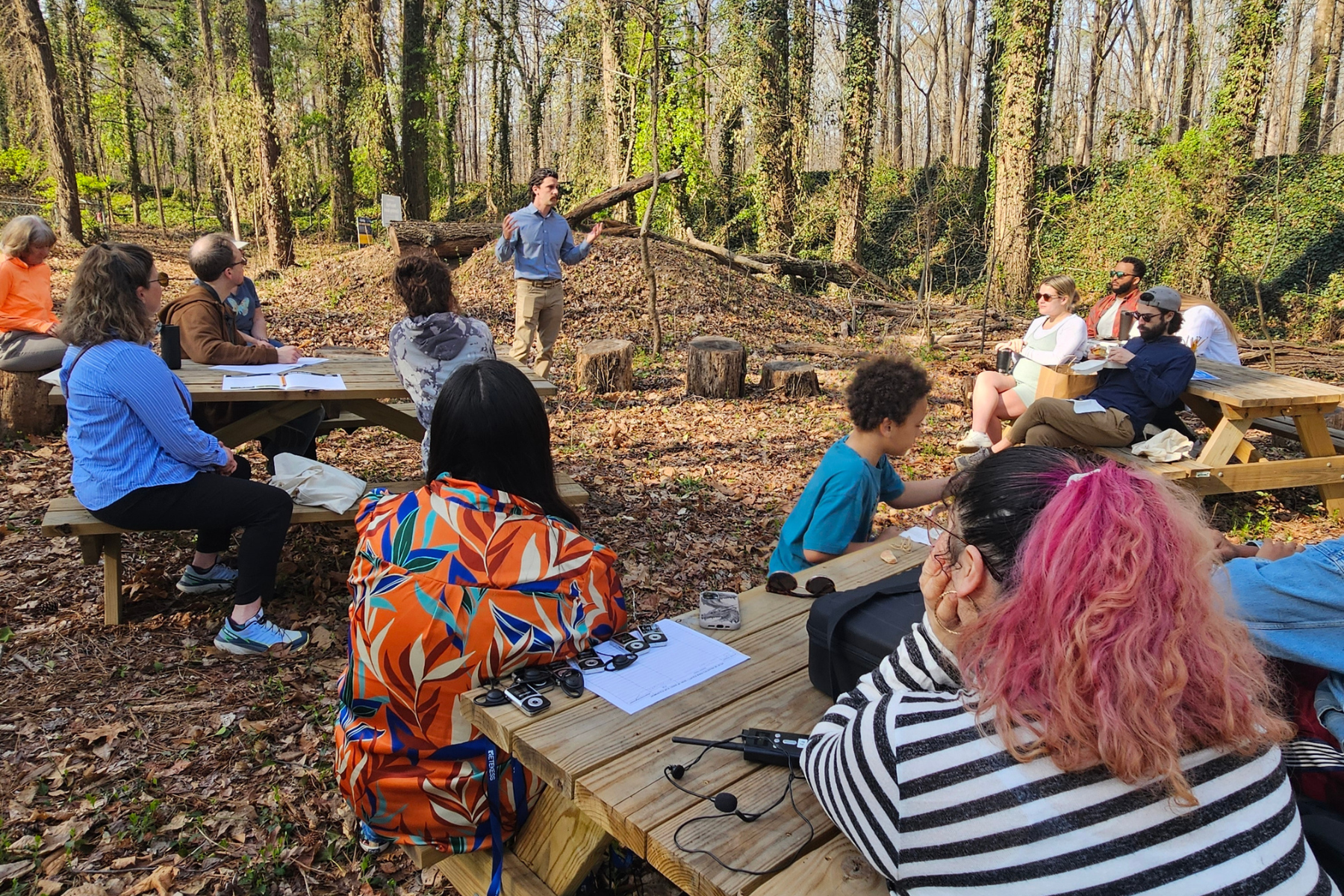
A planting requirement is not the same as a lasting canopy requirement. If a required tree dies shortly after construction and is not replaced, the projected canopy never materializes. State law allows violations of qualifying local tree ordinances to be treated as zoning violations, which makes clear local standards and follow-through important.
Tree selection also matters for long-term canopy. Required trees should be appropriate for the site and selected for longevity, climate resilience, available growing space, and other site conditions. The City’s Urban Forestry staff should have the authority to establish and maintain guidance on appropriate species and planting standards so that required trees have a realistic opportunity to survive and reach maturity in accordance with the City’s tree ordinance.
Southside ReLeaf recommends:
Establishing a reasonable post-construction survival period for required trees.
The zoning code should reference tree statutes under the City’s tree ordinance to allow monitoring of tree health and site conditions during the post-construction survival period.
Establishing oversight practices for post-construction inspection and verification that required trees have been planted or preserved and remain in place and healthy through the applicable survival period.
The zoning code should direct the appropriate City department, including Urban Forestry, to establish and periodically update guidance on recommended species, planting locations, soil volume, root space, mature size, and other site-specific requirements.
A Durable Framework for a Growing City
Richmond is also developing its first Urban Forest Master Plan — the Richmond Tree Plan — as a long-term strategy for planting, protecting, and caring for trees across the city. The City describes that plan as supporting Richmond 300 and RVAgreen 2050.
Code Refresh is an opportunity to connect Richmond’s land use rules to the City’s adopted goals for climate resilience, public health, and equitable growth. Draft Three includes several changes that can move Richmond in the right direction. The final code should turn that vision into lasting rules for tree protection as Richmond grows.
Southside ReLeaf appreciates the improvements in Draft Three, but the final code needs clear answers about which projects must protect or replace trees, when alternatives to on-site canopy are allowed, and how the City will verify that required trees survive. Richmond should also explain how the zoning code, tree ordinance, and Richmond Tree Plan will work together, and review its tree standards against Virginia Department of Forestry guidance as they are updated.