
By Woody Rogers, guest blogger, Policy Director at the Partnership for Housing Affordability
Series Introduction
The places we call home are shaped by policies and investments we choose to prioritize. Richmond's zoning code shapes where people can live, how neighborhoods grow over time, and who has access to opportunity. Yet the city's zoning ordinance has remained largely unchanged for more than 50 years, reflecting broader planning and infrastructure systems that have also struggled to keep pace with the city's changing population, economy, and housing needs.
As the city continues to work on the next draft of Code Refresh, Southside ReLeaf is asking our neighbors a fundamental question: “What kind of community are we trying to build?”
To help explore this question, we invited partners who advocate for housing affordability to guest-author a three-part series examining the relationship between housing and zoning in Richmond.
In Part III of the series, Woody Rogers explores Richmond’s growing housing affordability crisis and its disproportionate impact on households historically excluded from homeownership and wealth-building. The blog examines why no single solution exists and why zoning reform is one critical piece of a broader approach to creating and preserving affordable housing, preventing displacement, and helping more families put down roots in Richmond.
A home is more than a place to live. For those who can afford it, homeownership gives families safety and stability, serving as an important foundation for financial security, community connection, and generational opportunity.
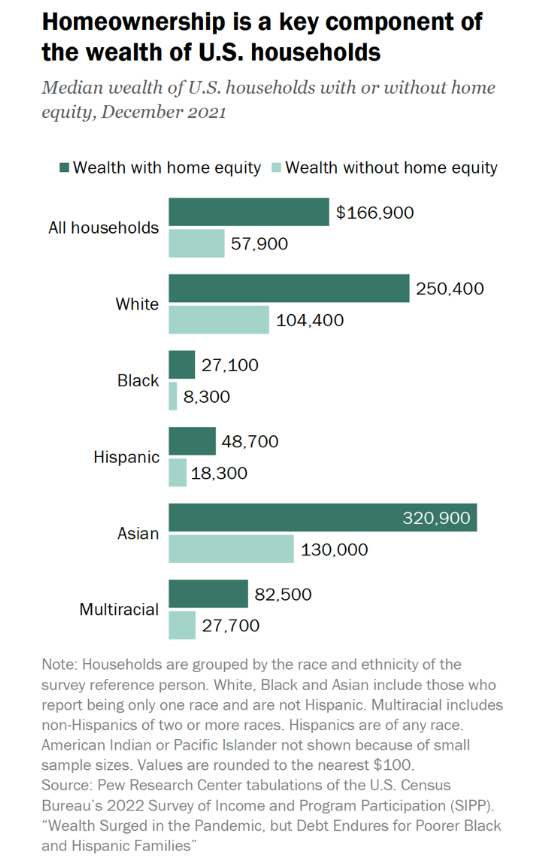
This chart shows how much home equity contributes to household wealth and the disparities in household wealth across racial groups. The dark green bar represents wealth with home equity, and the mint green bar represents wealth without home equity.
But that opportunity is increasingly out of reach for Richmond-area families, and people historically excluded from wealth-building are being hit hardest. For better or worse, housing is intrinsically tied to wealth-building in our country. Across the U.S., home equity accounts for 45% of the median household’s net worth. Without a stable home, achieving financial stability is impossible. Without financial stability, buying a home is unrealistic. And without homeownership, achieving multigenerational wealth is challenging.
Part I and Part II of this series explored Richmond’s legacy of zoning as an exclusionary policy tool that reinforced racial discrimination in access to housing, and the role that land-use reform could play in complementing targeted efforts to curb displacement in the city. This final part looks at the possibilities that Code Refresh can have when paired with sensible policy solutions to expand housing opportunities and allow more people to put down roots in Richmond.
No single policy will make Richmond affordable. We need more housing overall, more deeply affordable housing, and policies that help people stay in the homes they already have. Code Refresh is only one important piece of that puzzle, but its impact will help preserve communities, build new housing, and create paths to homeownership when paired with the investments and policies needed for reform.
Addressing Richmond’s housing crisis requires a regional approach with buy-in from local governments, philanthropists, nonprofits, employers, and community-focused developers to make housing affordable for everyone who lives here.
A Growing Region, A Growing Crisis
The Richmond region is growing, welcoming an average of 46 new residents every day between 2020 and 2025. At the same time, housing prices have grown at rates far outpacing wage growth. In fact, only workers in one of the region’s five most common occupations (Business & Financial Operations) can afford the average rent. As demand for housing increases from new and existing Richmonders, housing prices have grown to unprecedented levels.

This chart shows average wages for the region’s five most common occupations, compared with the affordable median rent in Chesterfield, Henrico, Hanover, and Richmond (black bars) as of August 2022.
In 2025, the median home sale price was $418,880, up 43% from 2020, when the average was $292,000. Other factors, such as rising home insurance costs and mortgage rates, have made it even harder for families to buy homes. According to a PHA analysis, in 2020, a family earning just over $63,000 could afford the median-priced home. By 2025, a family needed to earn more than $124,000 to buy the median-priced home, nearly twice the income needed five years earlier.
At the same time, affordable housing has become increasingly difficult for lower-income households to access. According to the Joint Center for Housing Studies, the number of low-cost housing options has declined markedly over the past decade, with units renting for $1,000 or less down around 30%. For the more than 78,000 households in the region earning $36,000 or less, this decrease in affordable options places them in precarious conditions. The entire Richmond region, like much of the nation, is facing a housing affordability crisis (Richmond City Council acknowledged this crisis in a 2023 resolution). The National Low Income Housing Coalition estimates a current deficit of 39,000 affordable housing units for low-income households throughout the region.
The Disproportionate Burden of the Housing Crisis
The current housing crisis isn't just about housing costing too much. As noted in Part II of the series, Richmond also entered this crisis with a racialized wealth and homeownership gap that was produced in part by decades of discriminatory housing policies and regulations. Zoning and land-use policies determine who can live where and who has opportunities to build wealth. These inequities still shape who can afford to be safely housed.
In a regional market where homeownership has become prohibitively expensive and affordable rental options are dwindling, renter households often spend a large share of their income on housing, leaving little for food, healthcare, transportation, and other necessities. Right now, about half of renters in the region pay too much for housing (more than 30% of their income, considered a “cost burden”), and about 1 in 4 pay more than half of their income on housing costs alone. Nearly 80% of renter households with incomes below $34,000 (around 30% of the Area Median Income) pay half or more of their income on housing.

This chart shows homeownership rates by race and ethnicity from 2011 to 2021, illustrating disparities across groups. White, non-Hispanic households had the highest homeownership rate, while Hispanic or Latino households had the lowest in 2021.
Historical and ongoing racist systems and practices contribute to Black and Latino households experiencing housing cost burdens at higher rates and being more likely to be priced out of homeownership. Nearly 60% of Black and Latino renters are housing cost burdened, while the homeownership rate for Black and Latino households is 30% lower than white households in the region. Black and Latino households are at greater risk of housing insecurity and displacement from their homes because of less accumulated wealth and resources to survive current market conditions.
Data from the Partnership for Housing Affordability’s (PHA) Housing Resource Line (HRL) — which provides Richmond-area residents with a centralized access point to programs and services that will help address their housing needs — received over 7,500 calls in 2025. That’s a three-year high for Richmonders looking for housing assistance.
Of those calls, 85% sought financial assistance to pay rent, utilities, or security deposits, or asked about rental options because they couldn't find affordable housing on the market. More than half of callers had children living in their homes, and 60% earned less than $25,000 a year, illustrating the instability many lower-income families currently face in Richmond's housing market. Without direct policy intervention to create more housing options, these families risk losing their homes and the safety and stability they depend on.
Richmond’s housing crisis affects everyone, but not equally. And because the starting point is not equal, the policy response can’t be one-size-fits-all.
A Multifaceted Approach to Housing Affordability
Creating more affordable housing is as challenging as ever, with costs skyrocketing, funding highly competitive, and overall demand for affordable units increasing. No single solution can address the complex and intersectional nature of this crisis. It requires multi-faceted, multi-targeted, and creative policy solutions with a “both-and” approach, using strategies to achieve two key goals:
Increase overall housing supply and market availability.
Provide more low-cost, deeply affordable housing options for those who struggle to afford market-rate housing.
Strategy #1: Address Housing Scarcity
Increasing the overall housing supply can help address scarcity and pressure in a constrained market. But more market-rate housing alone will not meet the needs of households who cannot afford market-rate rents or home prices. Those households also need deeply affordable housing, financial assistance, preservation of existing affordable homes, and protections against displacement.
Strategy #2: Inclusive Zoning
We must use an all-of-the-above approach, including updating Richmond’s zoning code. Land use and zoning are critical tools that directly impact the region’s overall housing supply. As Casey wrote in the first part of this series, zoning has historically been used to discriminate and exclude. To address some of the deepest roots of our current housing crisis, we must expand where different types of housing can be built and allow more housing options throughout the city.

PHA annually hosts a State of Housing event, which brings regional housing stakeholders, local officials, and community members together to get a data-driven look at the Richmond region's housing landscape, address critical industry trends, and announce housing priorities and action items for the coming year.
Strategy #3: Preserve Existing Affordable Housing
Code Refresh can help create more housing opportunities and give people more choices about where they live. But expanding the overall housing supply is only one part of the solution. Code Refresh cannot and will not solve our housing affordability crisis on its own. Additional funding to create affordable housing can fill the gap in providing housing options for Richmonders with the lowest incomes. Additional supports, such as home repair grants, property tax relief, and rental assistance, can help households at risk of displacement, as Annika wrote in the second part of this series. Preserving our existing affordable housing stock through rehabilitation and acquisition funding is critical to preventing the loss of low-cost housing options.
Strategy #4: Regional Coordination
Finally, it’s important to remember that the regional housing market does not recognize political borders. People move across city and county lines for jobs, schools, transportation, family, and affordability, while developers and housing markets respond to opportunities across jurisdictions. That's why these strategies cannot stop at the city limits. Housing is a regional system, and decisions made in one locality affect housing costs, development patterns, transportation, and displacement throughout the region.
When one locality adds housing while neighboring jurisdictions limit where and what can be built, the region’s housing supply remains constrained. Likewise, affordable housing and anti-displacement efforts concentrated within a single jurisdiction cannot fully address the needs of people who live, work, and move throughout the region.
Richmond, Henrico, Chesterfield, Hanover, and the metro area’s two fastest-growing counties — New Kent and Goochland — all have a stake in creating more housing and preserving affordability. Regional coordination can help ensure that growth is matched with housing opportunities, and that no single community is expected to solve a regional problem on its own.
Paving the Way for an Affordable Richmond
Though the need for more affordable housing can feel like a Herculean challenge, creating opportunities for all Richmonders to live comfortably in safe, sustainable, affordable homes of their choice is achievable. These efforts require the multifaceted policy approach as outlined above, as well as total buy-in from stakeholders of all kinds. Our local governments, corporations, philanthropists, nonprofits, and developers all have critical roles to play to adequately address our housing affordability crisis. Our goal at PHA is to promote policy solutions that build toward an affordable region through collaborative engagement across the sectors and communities that influence Richmonders.
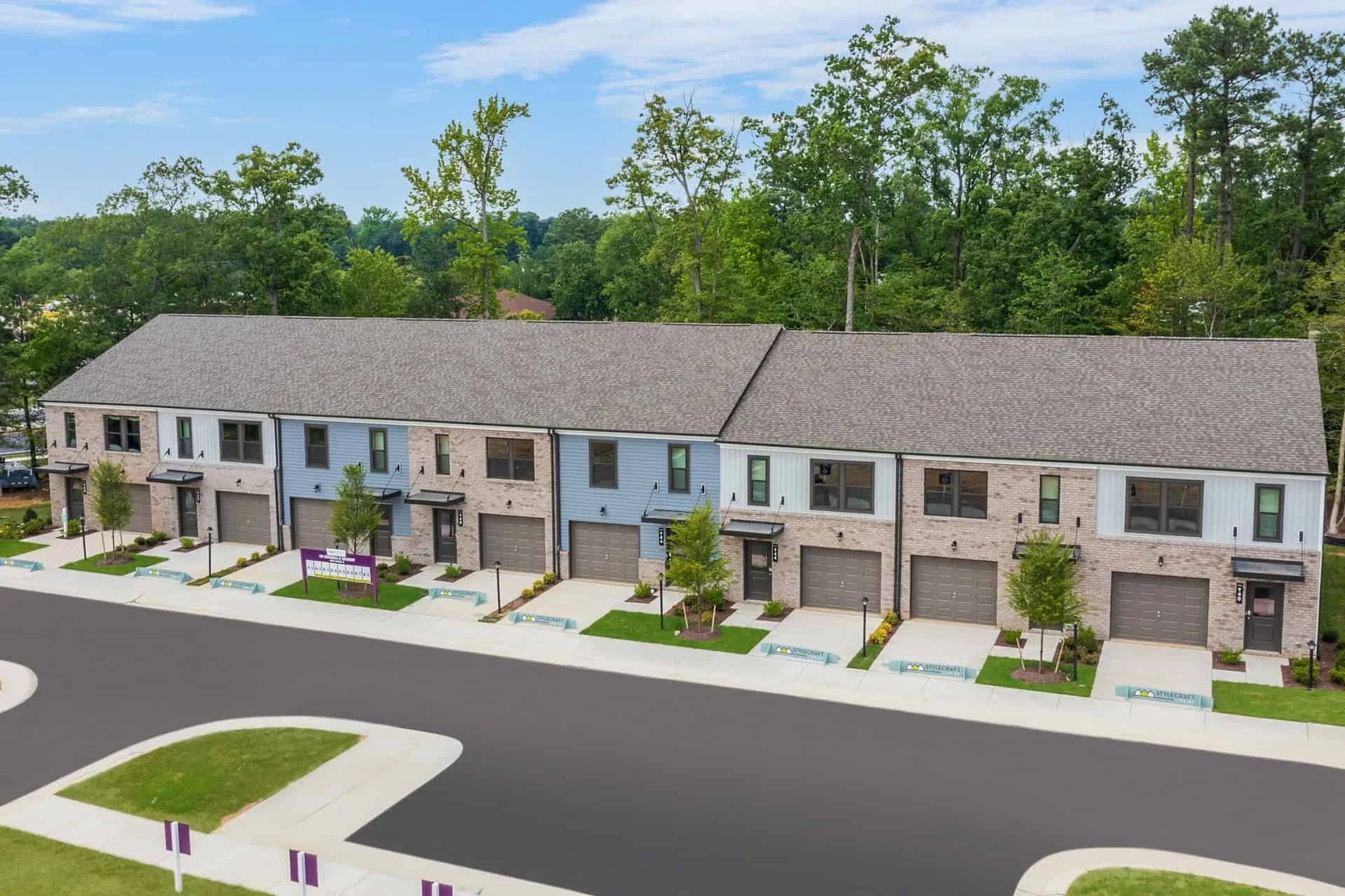
These two-story townhomes are part of The Crossings at Mulberry in Henrico, developed by StyleCraft Homes. The community includes affordable housing partnership units through the Henrico County Housing Trust Fund.
We have already seen significant progress in just the past few years, creating new housing opportunities for families to build wealth and put down roots. Programs that help low- and moderate-income households purchase homes, especially those historically excluded from the benefits of homeownership, have expanded opportunities across the region.
Some examples include:
LISC Virginia’s WORTH Initiative: Expands pathways to homeownership by providing financial assistance and counseling to Black and Brown households, helping them facilitate the purchase of their first homes. Part of a larger national effort funded by Wells Fargo, the initiative has helped create over 2,300 new homeowners who have historically faced systemic barriers to building wealth through housing. Other down payment assistance programs targeting low-income households allow new homeowners to access up to $40,000 to access the benefits of homeownership.
The Henrico Housing Trust Fund: Creates affordable homeownership opportunities by leveraging the private development sector to set aside over 400 new homes under construction in just the past 3 years at more affordable prices. By using grant funds to offset home costs and pairing them with developer incentives to streamline construction, the Trust Fund has demonstrated that affordability can be seamlessly integrated into private development through simple, efficient parameters that benefit both the builder and the future homeowner.
Richmond’s Affordable Housing Trust Fund: Dedicates 2.5% of real estate tax revenue each year (around $12 million for FY27) to affordable housing development, a near-100% increase in funding since 2020.
Virginia’s renter protections: Increases protections for renters to live in safe, stable homes, which ultimately builds financial security and creates more opportunities for homeownership.
These policies and programs highlight a few solutions within the complex web of approaches that will lead to an affordable Richmond, as well as the more coordinated efforts necessary to ensure no Richmonder is left behind. No single program, funding source, or policy can close Richmond’s housing gaps on its own. But together, strategies that expand housing choices, create and preserve deeply affordable homes, prevent displacement, and expand pathways to homeownership can move us toward a region where more people can afford to stay and thrive.
With a zoning code that shapes communities to include rather than exclude, these policies can maximize their impact. By creating more housing opportunities in Richmond — whether through zoning changes like Code Refresh or direct affordable housing policy — we move toward a more affordable, accessible region where more people can afford to live, put down roots, and build a future.
Additional Resources:
Virginia Housing’s Down Payment Assistance Grant
Virginia Department of Housing and Community Development’s HOMEownership Down Payment and Closing Cost Assistance
Housing Opportunities Made Equal of Virginia’s Homeownership Program
Southside Community Development & Housing Corporation’s Homeownership Center
