By Chad A. Sanders, J.D., Executive Director of RVA Rapid Transit
Public transit is about more than getting from one place to another. It is about who gets to participate in the life of our city.
Since arriving in Richmond, I have been getting to know this city the way many residents do: one trip, one neighborhood, and one new discovery at a time. As a daily transit rider, I have also been reminded that a city's experience changes depending on how you move through it.
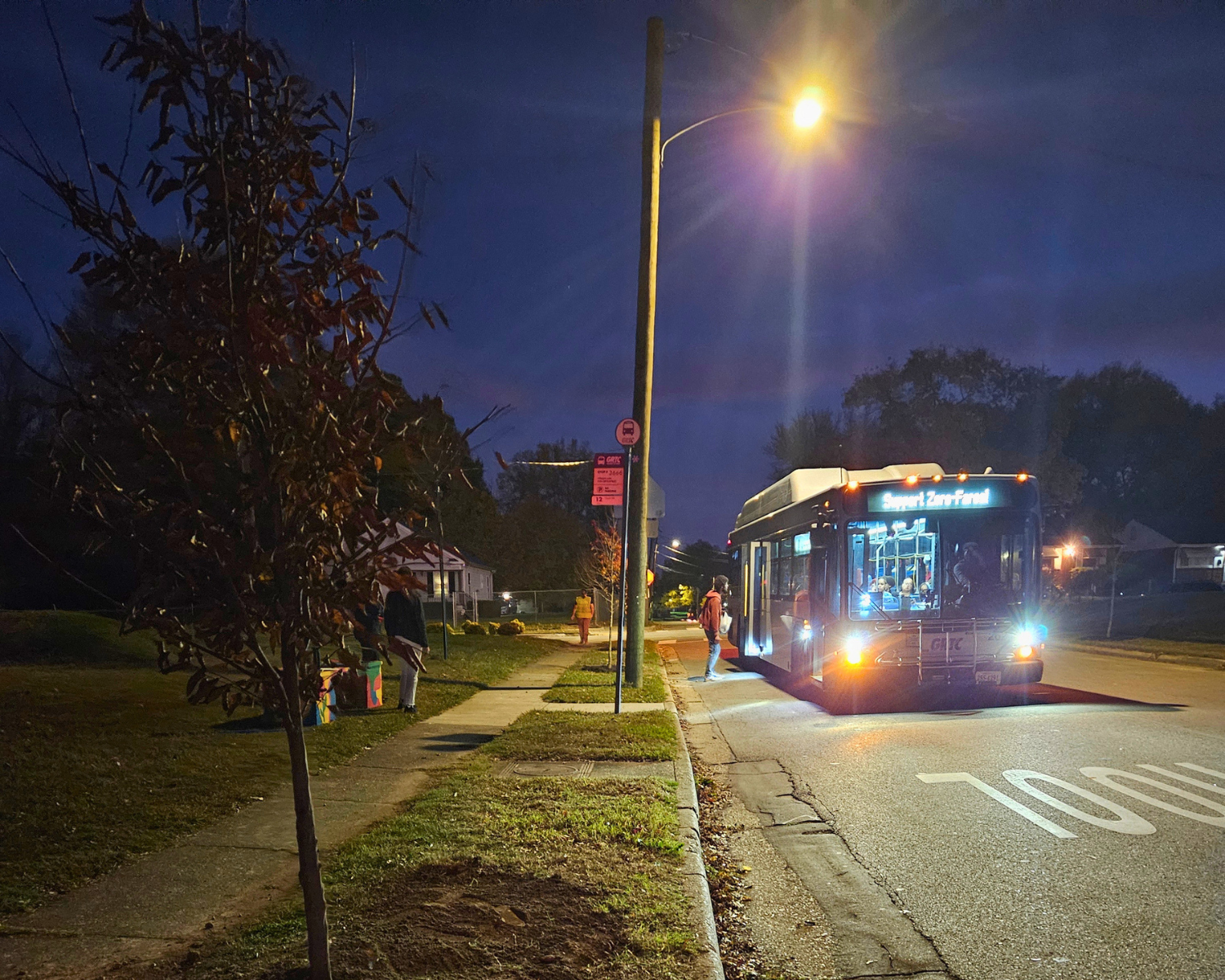
Community members board GRTC at bus stop #3667 (Fairfield Ave. and Kane St.) in November 2025. A tree planted earlier in the day by the Greening Bus Stop Alliance stands in the street light’s shadow.
When you travel by bus, you experience Richmond at street level. You see the neighborhoods between destinations, the people heading to school, work, the grocery store, and the places where daily life unfolds. You notice the connections that work, and the gaps that make a seemingly simple trip harder than it needs to be.
That experience has sharpened a question I believe Richmonders must keep asking: “What kind of city are we building if access to opportunity depends solely on being able to afford to drive or live in close proximity?”
We often think of transportation as roadways and bridges, traffic congestion, and commute times. Those things matter, but transportation is also about whether someone can get to work on time, attend a medical appointment, buy groceries, visit a park, pursue an education, or participate in their community’s civic and cultural life.
At RVA Rapid Transit, we believe Richmond should offer people meaningful transportation choices. Formed by faith and community leaders in 2016, RVA Rapid Transit is a nonprofit organization that educates and organizes the public and policymakers on the importance of investing in reliable service that reaches more places, safe and dignified places to wait, and fare-free access for working-class individuals and families. We are committed to ensuring that people who rely on transit — and those who face barriers to accessing the current system — have a meaningful voice in shaping its future.
Richmond’s Transportation Future is Connected to its Past
Richmond did not become a car-oriented city by accident. Its transportation network reflects generations of decisions by policymakers and developers about where roads would go, which neighborhoods would receive investment, where housing would be built, and whose interests would shape development.
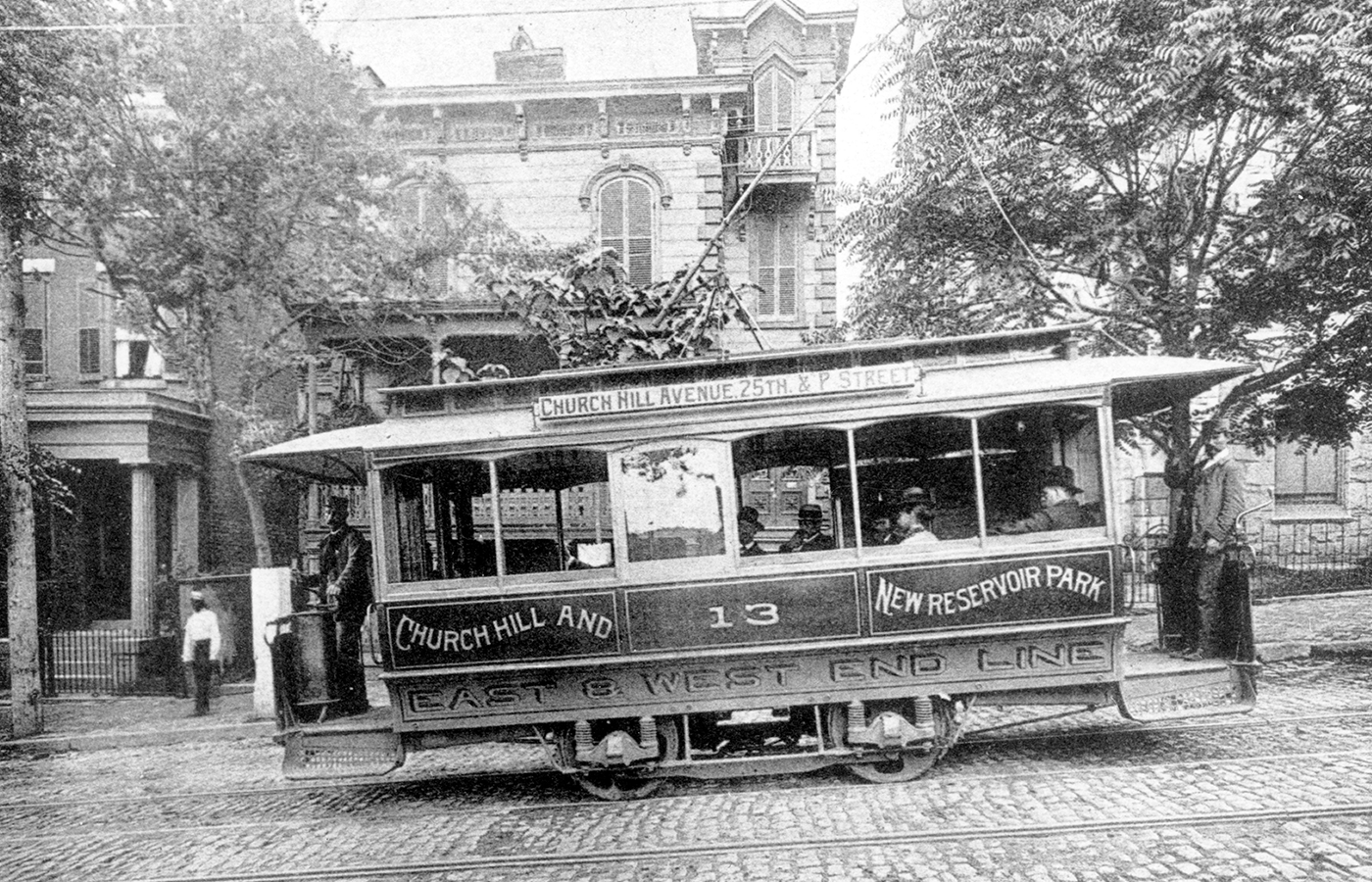
An 1890 photo of an electric streetcar motoring along cobblestone streets in Richmond. (Courtesy of The Valentine via VCU Magazine)
Richmond once had a pioneering electric streetcar system. By the 1930s, the network had expanded to about 82 miles of track, supporting neighborhood growth beyond the city’s original urban core. Yet that system was also segregated, and its history reminds us that transportation innovation alone does not guarantee equitable access.
In the following decades, the region’s growing dependence on automobiles, highway construction, urban renewal, and suburban development reshaped how people lived and traveled. Highway projects and urban renewal divided and displaced Historic Black communities like Jackson Ward, Randolph, and Fulton Bottom. Other communities, such as Short Pump or Brandermill, developed entirely around the assumption that residents would have access to a car.
The City of Richmond’s Path to Equity documents how transportation and land-use decisions have contributed to unequal access to jobs, services, and other necessities, with especially harmful consequences for Black residents and lower-income communities. It also recognizes that the effects of these decisions extend beyond city boundaries.
This history is not about assigning blame, but about acknowledging that public policy helped shape the transportation landscape we inherited and can help shape what comes next. Richmond 300, the city’s comprehensive master plan, articulates a vision of a more equitable, sustainable, and connected city. The question is whether our transportation investments will help turn that vision into something residents can experience in their daily lives.
The Cost of Having Too Few Choices
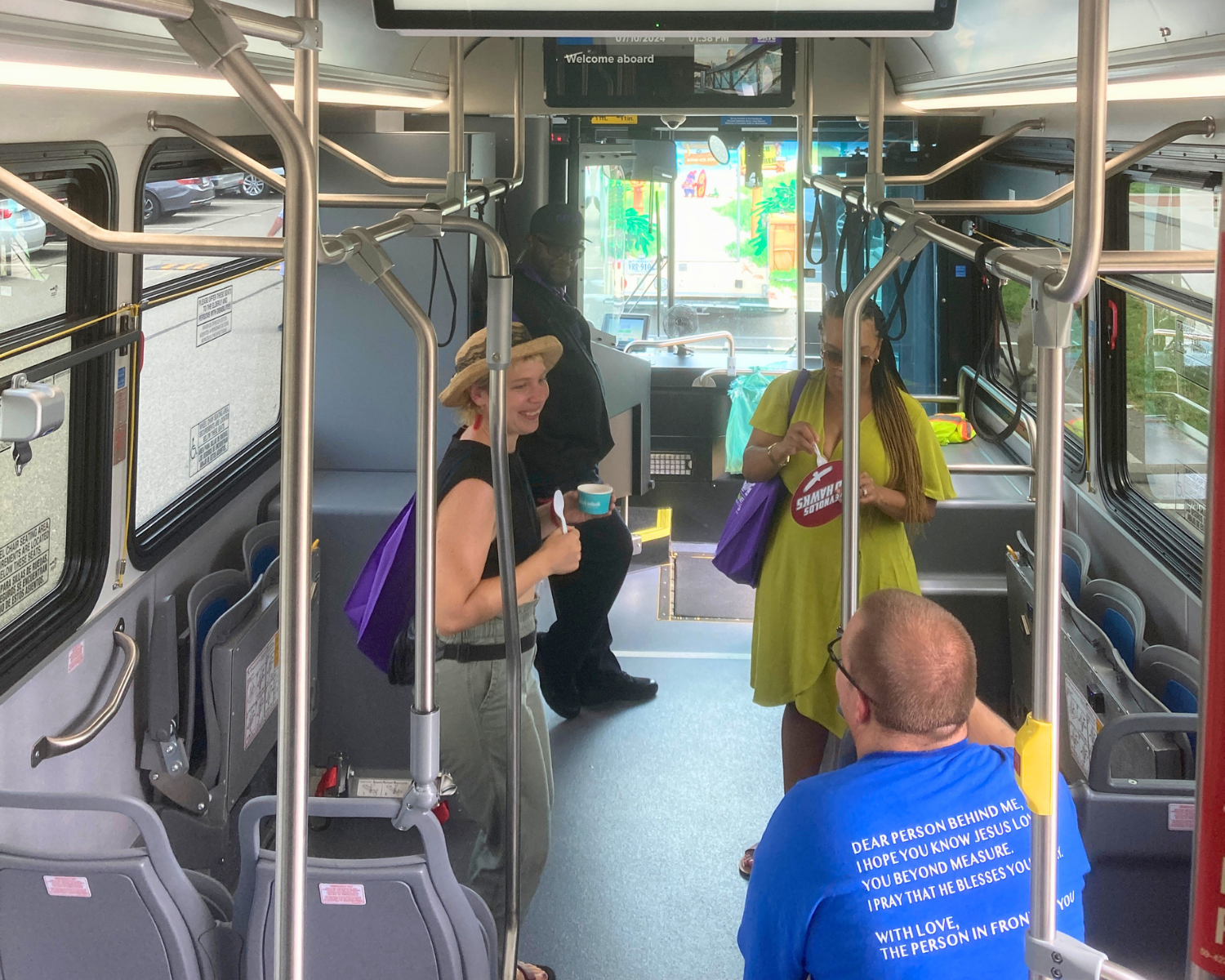
Transit Ambassadors from RVA Rapid Transit ride GRTC to engage with riders and gather their feedback.
For people who have dependable access to a vehicle, daily commutes require little thought or planning. For those who do not, commutes determine what is possible.
This distinction matters. A job may only be a few miles away, but distance alone doesn’t tell us whether a person can reach it. The availability of a transit route, service frequency, time of day, distance to a stop, and trip reliability all influence whether that job is truly accessible.
Likewise, a medical appointment is not accessible simply because a clinic exists in the region. A patient must be able to get there, arrive on time, and make the return trip. A missed connection or an infrequent route can turn a routine appointment into a substantial burden. Families face similar calculations when planning grocery trips, getting children to school and activities, or trying to enjoy Richmond’s parks and cultural destinations.
Limited transportation choices also affect employers and institutions. When workers cannot reliably reach a workplace, the effects can show up in recruitment, retention, attendance, and the pool of people who can accept a position. When workers, students, and patients struggle to reach jobs and services, institutions may be facing challenges that transportation policy could help address.
Transit alone cannot resolve poverty, unequal health outcomes, or the region’s housing challenges. Nor can a bus route replace safe sidewalks, dignified places to wait, or services closer to the people who need them. But transportation is one practical link among these issues.
If Richmond wants to expand opportunity, we must consider not only where opportunity exists, but also whether people can reach it.
Envisioning Our Future: A City with Meaningful Transportation Choices
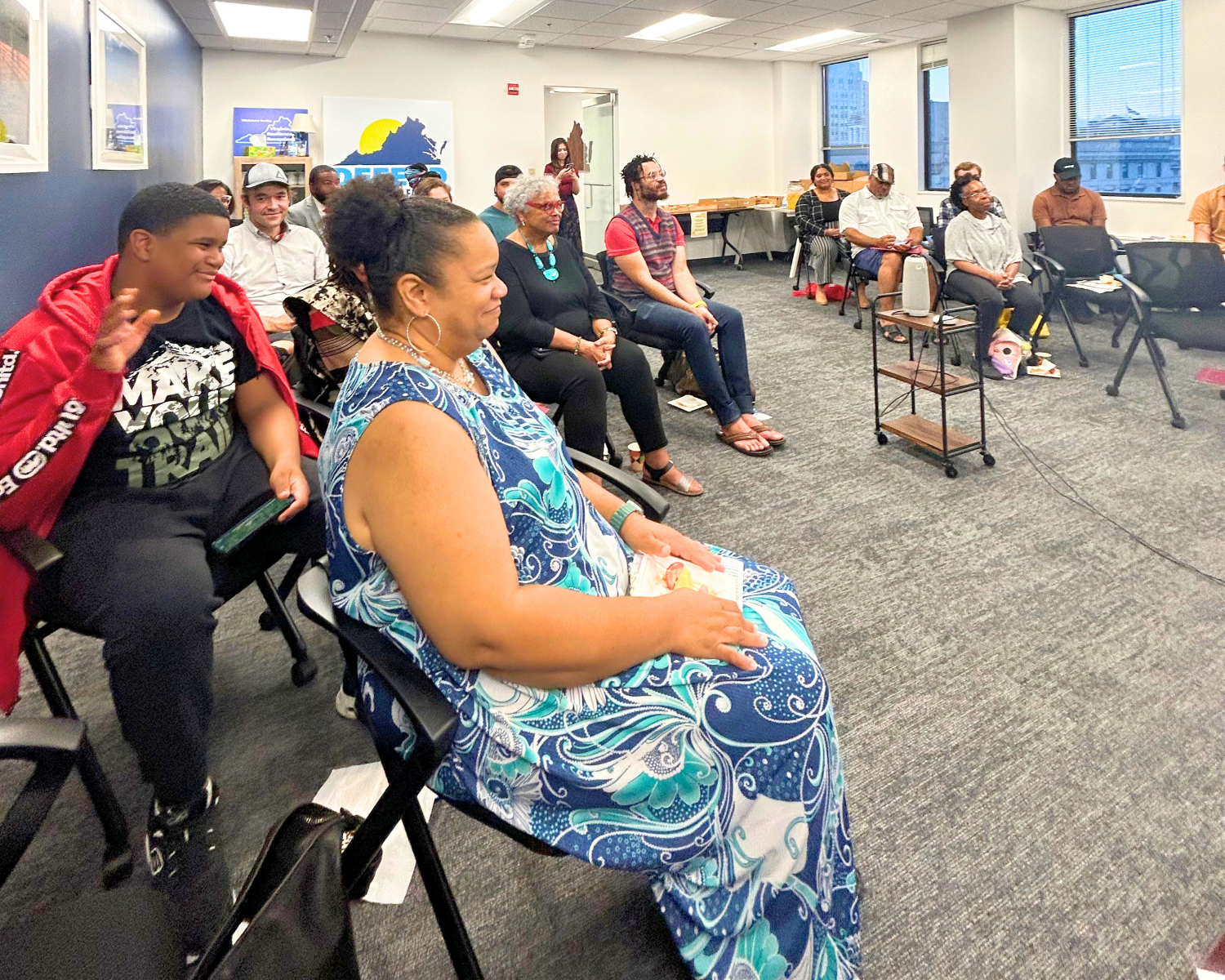
Participants in RVA Rapid Transit’s Mobility University listen to a presentation as they learn how to advocate for improved neighborhood connectivity.
A stronger transportation future does not require everyone to stop driving. It requires residents to have viable alternatives when driving is not affordable, practical, desirable, or necessary.
That future includes buses that arrive frequently enough to make travel predictable; service that reflects the schedules of workers who start early, finish late, or work weekends; safe, comfortable stops; accessible boarding; clear route information; and sidewalks that let people reach transit without risking their safety.
It also requires thinking regionally. Richmond’s economic life does not stop at the city line. People live, work, study, and seek services across the Richmond region, including Henrico, Chesterfield, Hanover, and other parts of Central Virginia. A transportation network that reflects those connections can help employers reach a broader workforce and help residents reach a wider range of opportunities.
These are not new ideas. Richmond’s planning documents already recognize the importance of equitable transportation, connectivity, and access. The challenge is to carry those commitments into funding decisions, service planning, infrastructure improvements, and implementation. The best way to do that is to listen to the people who rely on transit every day, as well as residents who have concerns or unmet needs that make public transit impractical for them.
As we work toward that future, we should judge transportation investments by more than the number of vehicles on the road or the miles of infrastructure constructed. We should also ask whether an investment makes daily life more manageable, expands access to opportunity, and gives more residents a meaningful choice in how they travel.
Why Zero-Fare Transit Belongs in Our Transportation Future
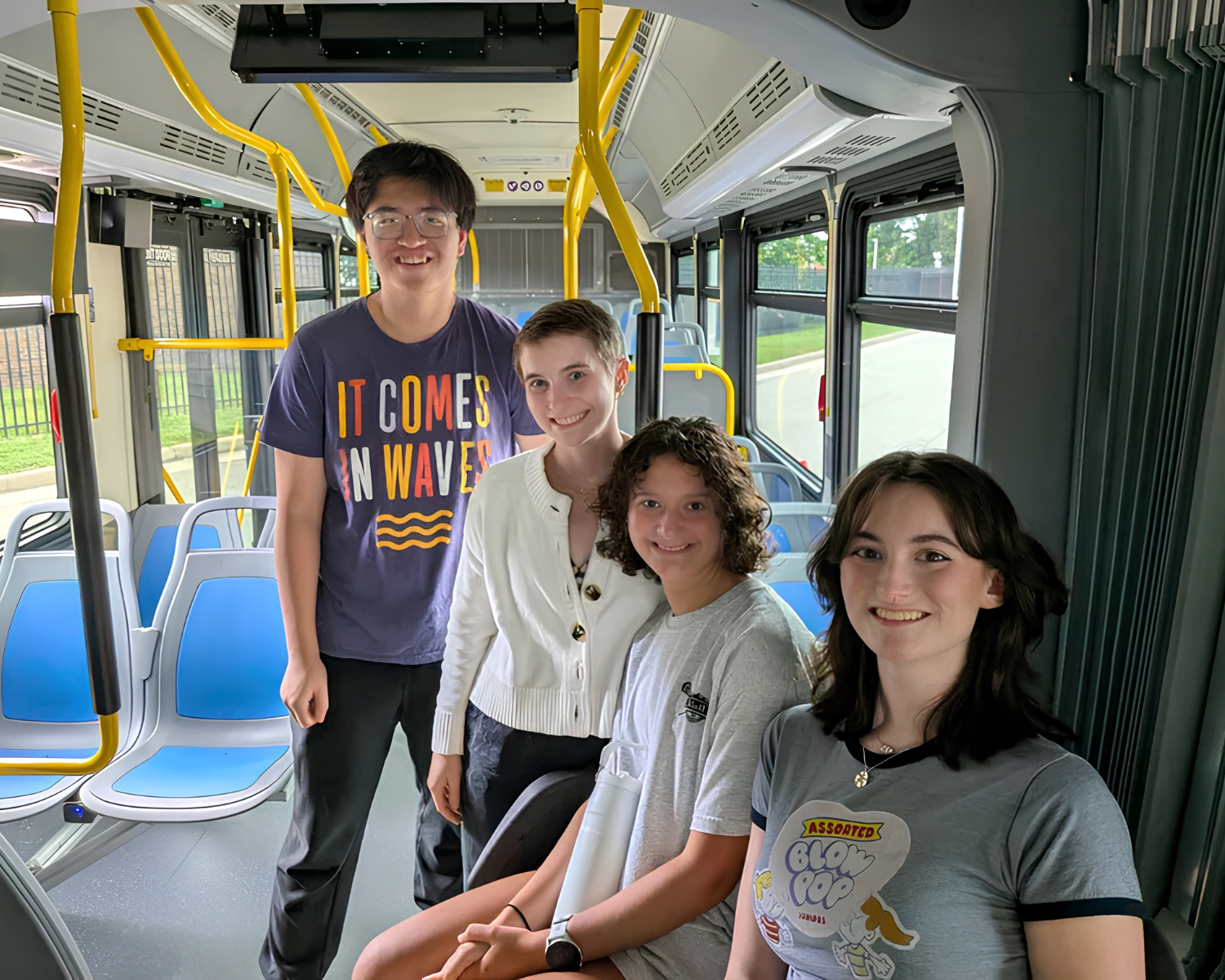
Students from the University of Richmond ride GRTC as they tour Richmond neighborhoods to look for flooding after recent rainfall.
In March 2020, GRTC began operating fare-free service as a public health measure during the COVID-19 pandemic. What began as a response to extraordinary circumstances grew into a significant feature of the region’s public transportation system.
GRTC’s Open Access Transit program allows riders to board fixed-route buses without paying a fare. GRTC provided more than 12.1 million rides in fiscal year 2025, setting a system record. GRTC attributes that result to several factors, including expanded service, zero-fare access, and rider trust.
That record is worth recognizing and gives us an opportunity to consider what fare-free service means for the people who depend on transit and for the region as a whole:
Zero-fare removes a direct financial barrier. For someone making multiple trips a day, fare costs can add up. Eliminating that cost leaves more money available for other needs.
Zero-fare boarding makes the system easier to use. Riders don't have to find exact change, buy a pass, or maintain a fare balance before a trip. That simplicity matters for people on tight budgets, with unexpected travel needs, or new to the system.
Zero-fare establishes a clear public commitment. Public transit is a shared community resource, and access isn't conditioned on a rider’s ability to pay.
Making that Future a Reality: Where We Go From Here
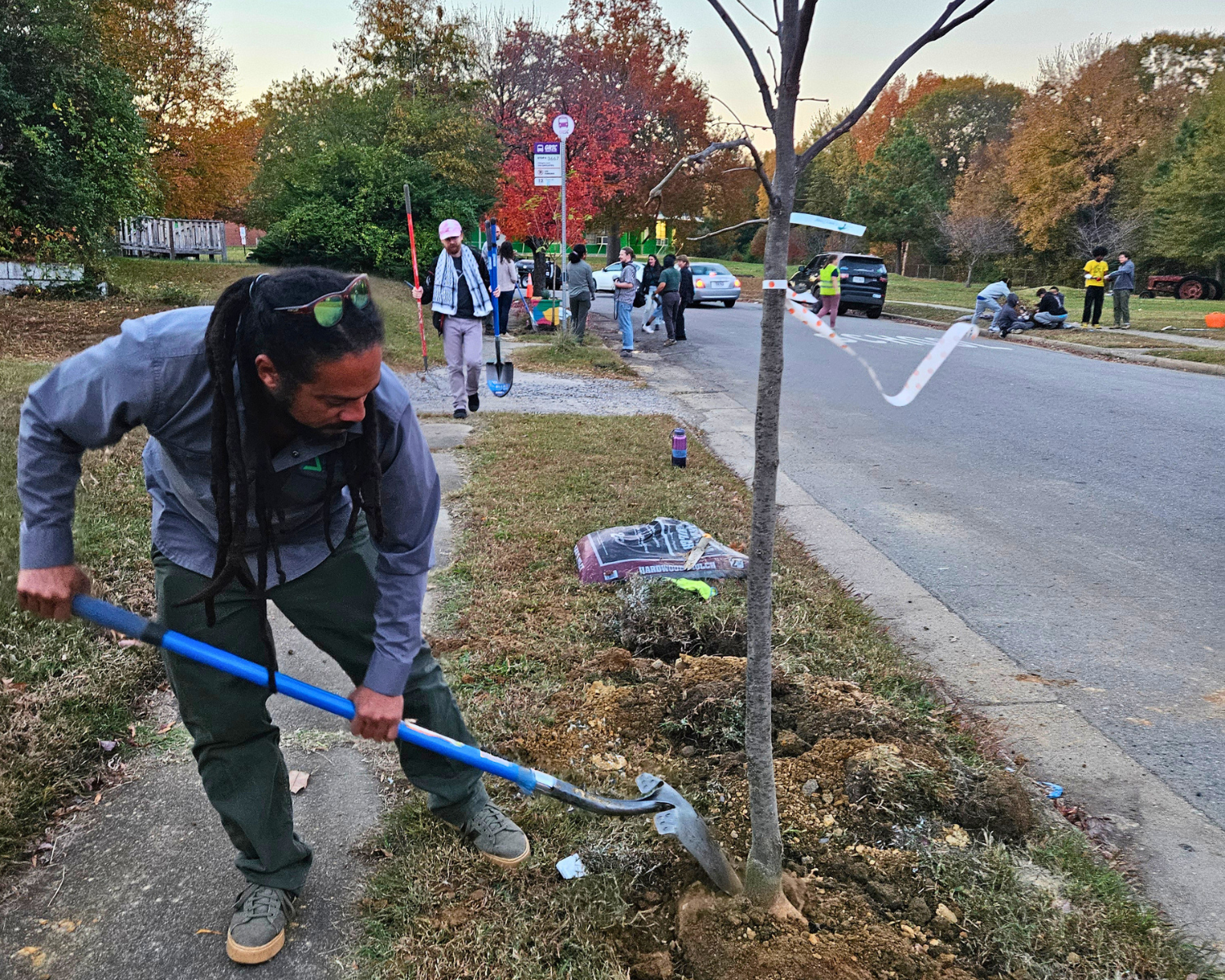
Nathan Burrell, Executive Director of Groundwork RVA, plants a tree at bus stop #3667 (Fairfield Ave. and Kane St.). Adding more shade to bus stops is one way to create safer, more dignified places to wait for the bus.
Investing in public transit is an investment in Richmond's people, neighborhoods, and economic vitality. While creating a transit system that works for everyone requires infrastructure and funding, it also requires listening to riders, supporting community-led improvements, and ensuring residents have a voice in the decisions that shape our transportation future.
At RVA Rapid Transit, we're putting that vision into action through several rider-first initiatives. Our Transit Ambassadors engage with riders at bus stops each week, gathering feedback to help ensure community voices drive transportation policy. Through our free Mobility University, residents gain the knowledge and tools to advocate for better neighborhood connectivity. Our grassroots Better Bus Stop program brings volunteers together to transform neglected bus stops into cleaner, more welcoming spaces.
You can help move this work forward by riding GRTC, sharing your experiences with your neighbors and local decision-makers, and getting involved in efforts to protect zero-fare access and secure stable, long-term funding for public transit. Follow RVA Rapid Transit and GRTC on social media to stay informed about advocacy opportunities, community programs, and fundraising efforts. Together, we can build a transit system that gives every Richmonder a meaningful opportunity to participate in the life of our city.