Heat-Risk Management: Cooling Strategies for Community Health
by Syd Collier, Greening Coordinator at Southside ReLeaf
Spring holds the energy of promise, with warmer weather awakening young trees to bud and the first flowers to bloom. It’s the season that invites us back outside onto porches, into parks, and under open skies. As we ease into the enjoyment of spring, there’s an awareness that summer is just around the corner.
And in Virginia, summers are getting hotter.
In 2025, the state tied its warmest July on record and set a new high for average overnight temperatures. Richmond also experienced multiple days above 100 degrees, a trend that reflects a growing pattern of extreme heat. According to Virginia’s Department of Health, there were 4,013 emergency department visits for heat-related illnesses in 2025, a 33% increase from the previous year.
As temperatures rise, heat risk management becomes more critical, not just as an individual responsibility, but as a community-wide concern.
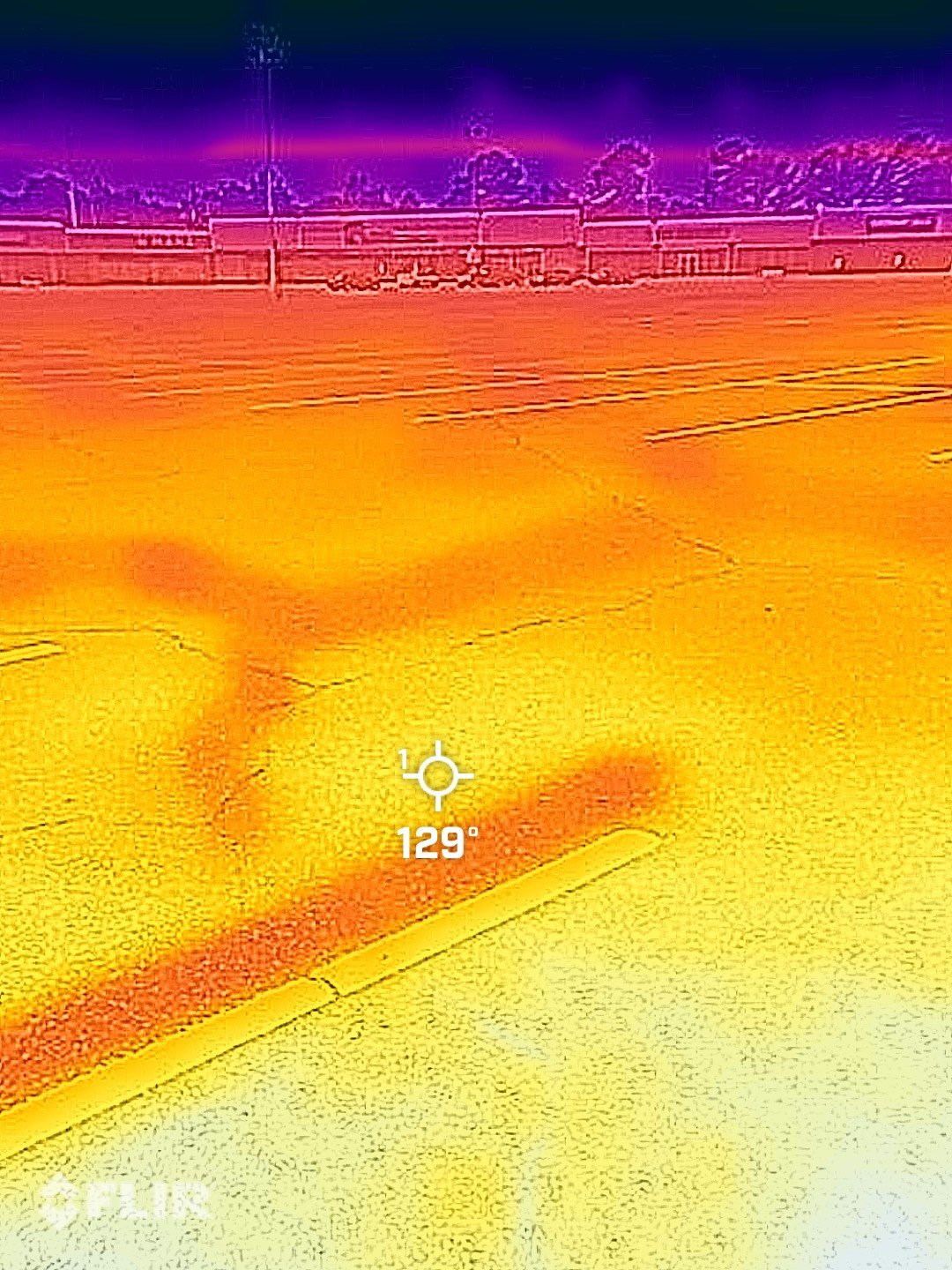
This thermal image shows a temperature reading of 129 degrees on the parking lot pavement at Southside Plaza on a summer day. The purple and pink colors along the tree line indicate cooler temperatures in the shade.
Heat Emergencies Are Not Equal
Extreme heat – a sustained period of high heat and humidity, with temperatures significantly above the local average for two or more consecutive days – is the leading weather-related cause of death in the U.S. The Virginia Department of Emergency Management qualifies prolonged temperatures above 90 degrees.
Because environmental conditions shape health outcomes, extreme heat doesn’t impact every neighborhood the same way. A lack of shade from the tree canopy and even tall buildings elevates temperatures, prolongs heat exposure, and contributes to heat-related health emergencies across Richmond’s urban heat islands. Areas with more asphalt, fewer trees, and limited green space absorb and retain heat throughout the day and into the night.
When temperatures rise, so do emergency room visits and 911 calls, especially in areas with limited shade and fewer accessible cooling spaces. The 2024 study, “A Heat Emergency: Urban Heat Exposure and Access to Refuge in Richmond, VA,” found that Black men over 50 years old, who are experiencing mental health issues, intoxication, and/or homelessness, bear the greatest brunt of heat emergencies.
In recent years, many heat-related emergency calls in Richmond have occurred near bus stops, where riders are often exposed to direct sun without adequate shelter. In 2025, environmental data analyst and volunteer Melanie Del Pozo found that 403 bus stops in Richmond have at least one vacant tree well, and 227 bus stops have no trees at all. Many of these shadeless stops are in formerly redlined neighborhoods, where riders already face higher heat exposure.
Residents in these same neighborhoods also experience higher rates of asthma and respiratory illness due to a combination of factors like poor air quality and housing conditions. Coupled with high energy burdens, climate stressors worsen families' health outcomes and economic stability.
Know the Difference: Heat Stress vs. Heat Stroke
Heat-related illness exists on a spectrum. As environmental justice advocates, it’s important that we understand public health impacts so we can implement effective mitigation strategies.
Heat stress is the body’s initial response to overheating. It presents with symptoms that act as warning signs: your body signaling that it needs relief.
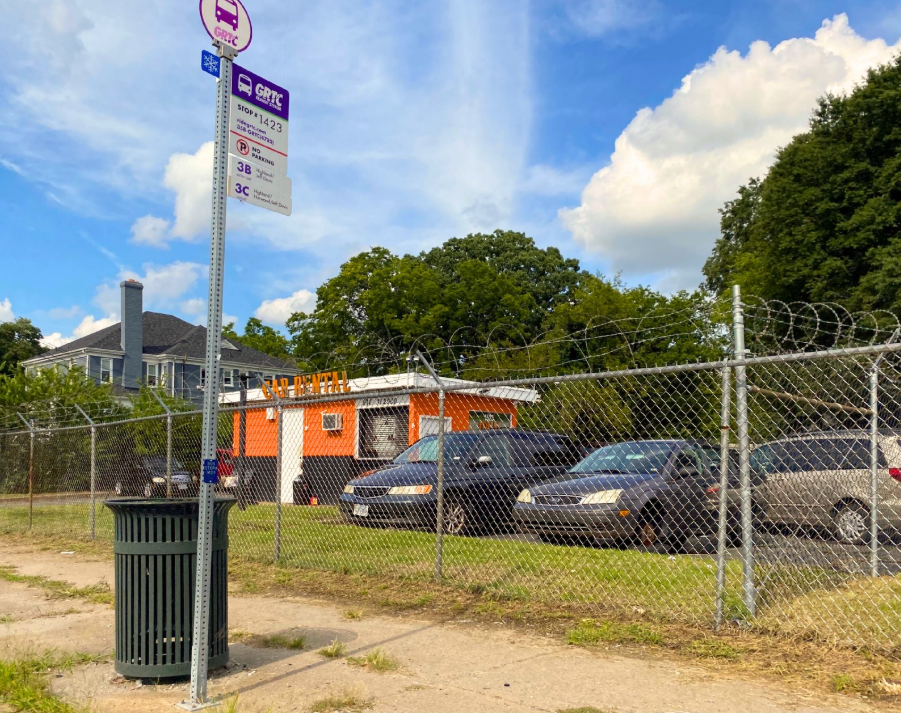
This photo shows GRTC bus stop 1423 along Richmond Highway. Like many bus stops in the city, there is no shade from trees or a covered bus shelter nearby, making it more dangerous for passengers as they wait in the heat.
Heat stroke, on the other hand, is a life-threatening medical emergency. It occurs when the body becomes overwhelmed by heat and can no longer regulate its temperature.
Those most vulnerable to extreme heat include children, older adults, outdoor workers, and individuals with pre-existing health conditions. Pregnancy also increases vulnerability, particularly in later stages, as heat exposure can impact fetal health and increase the risk of premature birth.
Symptoms of heat-related illness can include:
Dizziness
Headache
Nausea
Skin rash
Fainting
Muscle cramps
Heavy sweating
Recognizing these early signs can prevent more serious outcomes.
Preparation is Key for Outdoor Work
Southside ReLeaf shifts its outdoor programmatic activities indoors during the summer months to remain cool. However, we still have a responsibility to water and maintain our planting projects to ensure survival and long-term success.
Preparation is one of the most effective tools we have to keep our team and volunteers safe.
Stay Hydrated
Aim for consistent water intake throughout the day. A simple way to gauge hydration is by urine color — light or clear indicates good hydration, while darker yellow suggests dehydration.
Make a Cool Plan
Seek out shade when spending time outdoors, especially for prolonged periods. If you have air conditioning, ensure it is functioning properly before peak heat arrives. If not, identify nearby cooling spaces such as libraries, museums, and community centers. You can always call 311 to find out where the City of Richmond's current cooling centers are located.
If Symptoms Occur
According to the American Red Cross, if you or someone else begins experiencing symptoms of heat illness:
Drink plenty of fluids, including water and electrolytes
Move to a cool or shaded area
Wear lightweight, breathable clothing
Limit physical activity
Seek emergency help if symptoms escalate. A body temperature of 104°F, a rapid pulse, confusion, or loss of consciousness are signs of heat stroke — call 911 immediately.
Growing a Cooler, Healthier Richmond
Our Cool the City campaign aims to reduce health risks associated with extreme heat, especially for seniors, children, outdoor workers, and households without reliable air conditioning. Beyond taking individual action, we are focused on the systemic investments and interventions needed to protect and save lives.
This is where solutions take root.
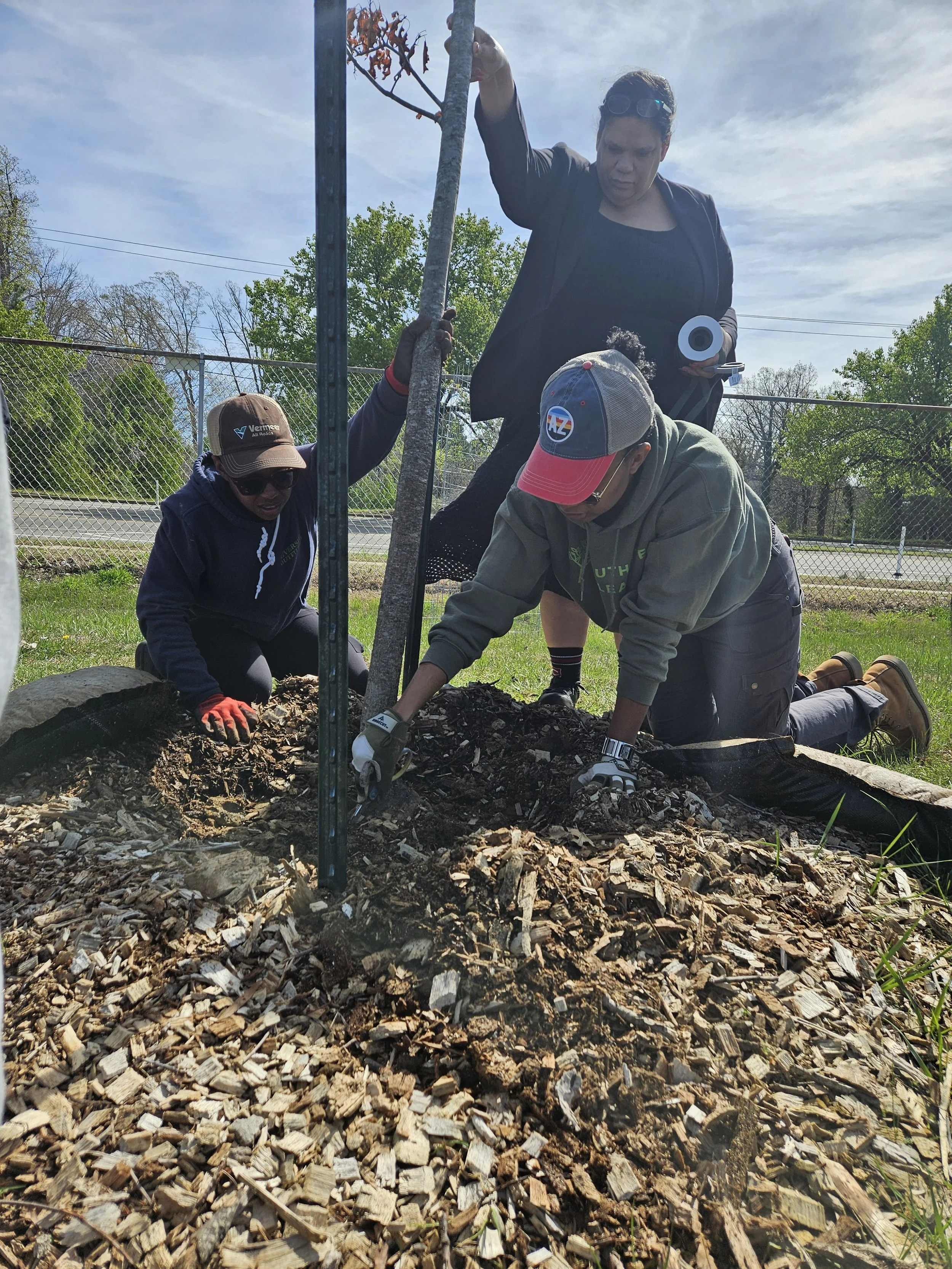
Urban greening is more than just planting trees; it also requires ongoing care and maintenance of young trees as they become established. The Southside ReLeaf team recently gathered with volunteers to provide care for young trees we planted at Boushall Middle School last fall.
Urban Greening
Tree canopy and green space are not just amenities; they are critical infrastructure for public health and climate resilience. Trees work by providing shade, releasing moisture into the air, and cooling both daytime and nighttime temperatures. In a warming climate, these benefits are more important than ever.
Install Shade Structures
Studies from around the world reinforce this. Even targeted shade structures — such as plant-covered trellises — can meaningfully reduce heat stress. This can be an exciting time for innovation when we continue to explore how we can collaborate with the natural environment to help protect us from the risks of heat.
In Richmond, resources like the Richmond Cool Kit, developed by the Office of Sustainability, offer practical guidance on heat preparedness strategies, including ways to incorporate shade, cooling materials, and community-based solutions into our built environment.
Workplace Readiness
Employers can play a key role in preventing heat-related illness by implementing clear heat safety protocols and fostering a culture of awareness and prevention. This includes providing access to air conditioning or cooled rest areas whenever possible, adjusting work schedules to avoid peak heat hours, and ensuring workers have frequent breaks, water, and shade.
Training is also critical. Employees and supervisors should be able to recognize the signs of heat stress and heat stroke, understand how to respond in an emergency, and take shared responsibility for monitoring conditions on the job. Encouraging a “buddy system,” where workers look out for one another, can help identify symptoms early and prevent serious health outcomes.
Provide Cooling Assistance
Trusted community spaces, including small businesses, resource centers, and houses of worship, can serve as accessible cooling centers during extreme heat events. Simple actions can make a meaningful difference:
Clearly signaling that community members are welcome to come inside and cool off.
Providing access to drinking water or refill stations.
Offering seating in air-conditioned or shaded areas.
Sharing information about additional nearby cooling centers or heat safety resources.
By taking these steps, local organizations and businesses can become part of a broader, community-driven network of care during extreme heat and play a vital role in protecting community members, especially those without reliable air conditioning.
As we look ahead to summer, heat preparedness is not only about individual actions like drinking water or seeking shade — it's also about collective action. By investing in green infrastructure systems that protect us, we can ensure that every neighborhood has access to the cooling benefits of trees.
Take time during Earth Month to prepare yourself and your neighbors for the coming heat.
Cool the City is a coalition between the City of Richmond and community-based organizations working to create greener, healthier futures in Richmond's neighborhoods that need it most.
Funding for this project is provided by the U.S. Department of Agriculture, Forest Service, in partnership with the City of Richmond. This institution is an equal opportunity provider.