Growing Richmond’s Future: Inside the Richmond Tree Plan
by Elena Zweerink, Department of Public Works - Urban Forestry Division, and the Tree Plan Team
“What do trees mean to you?”
That simple question helped launch Richmond’s Tree Plan in November of last year. At community events across the city, residents shared stories about favorite neighborhood trees, concerns about maintenance, and hopes for greener streets.
Those conversations are now helping shape Richmond’s first-ever Urban Forest Master Plan — a long-term strategy to grow, care for, and protect trees across the city.
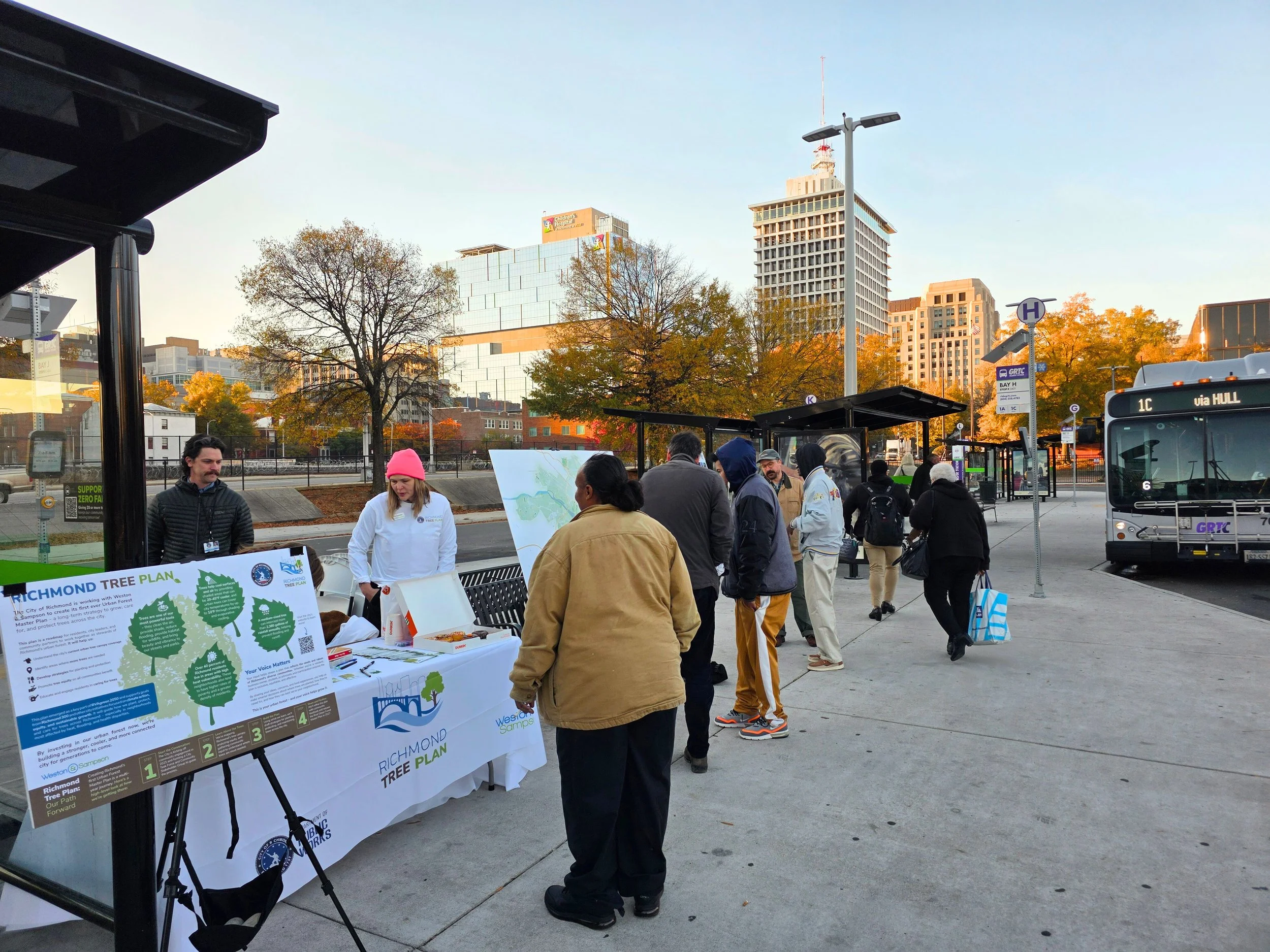
Richmond Tree Plan tabling at GRTC Downtown Transfer Station during Richmond Tree Week on November 5, 2025. Photograph by Brett Grunert, Weston & Sampson.
What is the Richmond Tree Plan?
The Richmond Tree Plan will serve as a roadmap for residents, city leaders, and community partners to work together as stewards of Richmond’s urban forest.
Once complete, it will guide the city's planting, preservation, and maintenance of trees while modernizing Richmond’s urban forestry practices to meet the needs of a rapidly growing city.
The plan’s goals will prioritize several key priorities to strengthen Richmond’s urban forest, including:
Conducting a comprehensive tree canopy assessment to track changes in canopy coverage over time.
Promoting tree equity and strategic planting to address urban heat islands.
Standardizing “Right Tree, Right Place” tree selection practices.
Implementing modern policies for tree maintenance and preservation.
Expanding outreach and education on tree stewardship.
The Tree Plan is also a key component of the city’s broader sustainability work. It supports the goals of RVAgreen 2050, Richmond 300, and other initiatives focused on climate action, equity, and sustainable growth. A priority will be ensuring trees are planted and protected in neighborhoods most affected by heat, flooding, and health disparities.
Trees are more than just landscaping — they are vital infrastructure. They cool neighborhoods, improve air quality, reduce flooding, and support physical and mental health. They also contribute to the beauty and character that make Richmond feel like home.
By investing in our urban forest now, Richmond is building a stronger, cooler, and more connected city for generations to come.
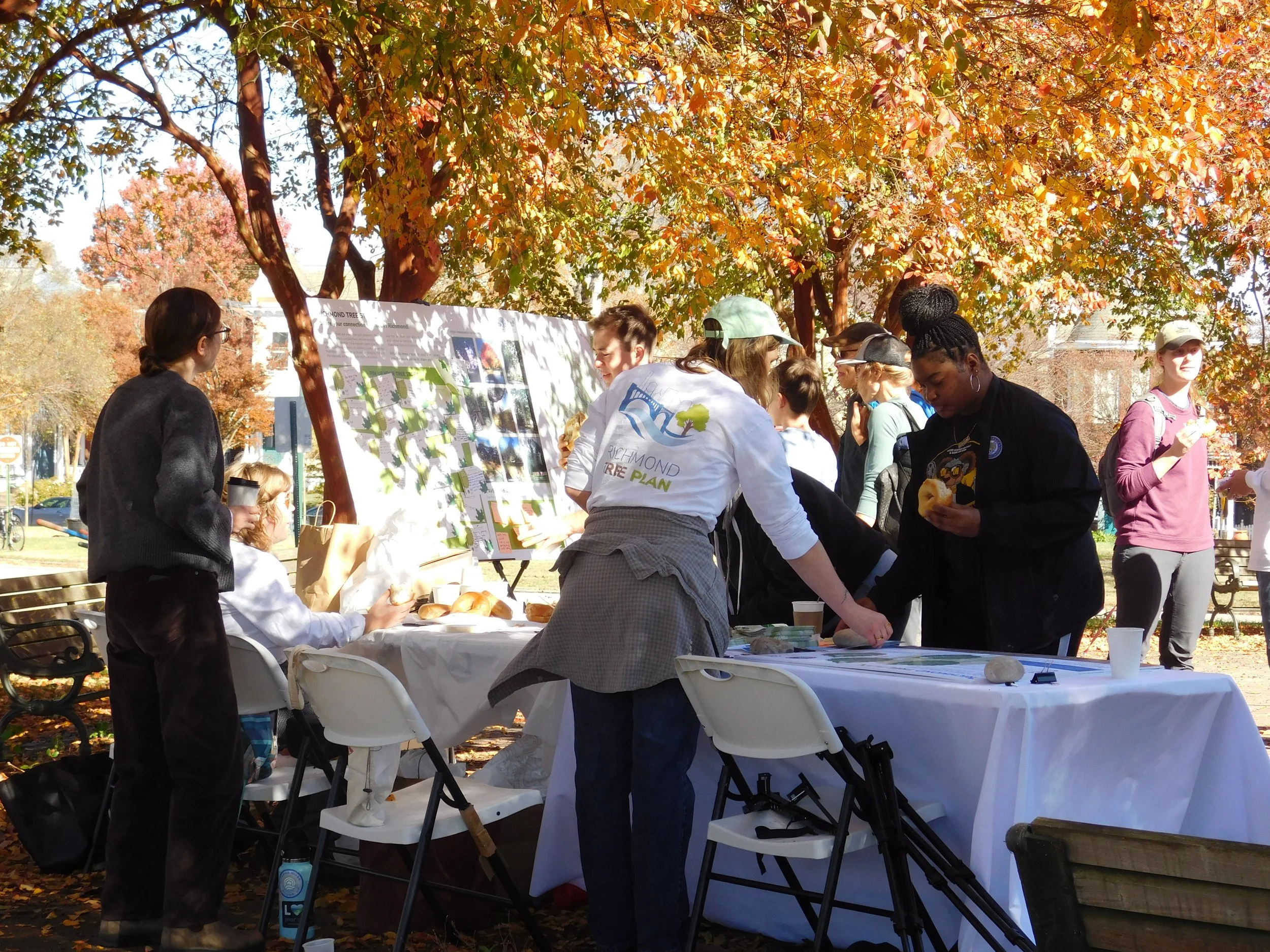
Richmond Tree Plan tabling at Chimborazo Park as a part of Richmond Tree Week on November 8, 2025. Photograph by Lizzie Suffa, Weston & Sampson.
Understanding Richmond’s Tree Canopy
A vital component of the plan is a new tree canopy assessment using updated data.
In summer 2025, the city’s Department of Information Technology commissioned the collection of LiDAR imagery — a technology that uses laser scanning to create highly detailed 3D models of landscapes. This will provide the most accurate picture yet of Richmond’s tree canopy.
Previous assessments conducted by the Chesapeake Conservancy’s Chesapeake Innovation Center found that Richmond’s canopy covered about 32% of the city in 2021. However, the city experienced a net loss of 199 acres of tree canopy between 2014 and 2021. If we are to reach a 60% tree canopy goal by 2050, greater investment is needed to preserve and replace trees.
The new LiDAR analysis will allow planners to compare canopy coverage across time and identify where the most significant losses have occurred. It will also build on local urban heat island studies to identify neighborhoods where additional tree planting can provide the greatest benefits.
Much of this research has been made possible through community science efforts led by Dr. Jeremy Hoffman and Groundwork RVA's “Throwing Shade in RVA” study, Plan RVA’sextreme heat mapping, Southside ReLeaf’s and the University of Richmond’s flood mapping and air quality monitoring, and the City of Richmond’s Office of Sustainability resilience assessment.
The updated tree canopy data will help ensure the Tree Plan prioritizes areas with lower canopy coverage so that the cooling, health, and resilience benefits of trees reach all Richmond residents.
Who is Developing the Plan?
The plan’s development is being led by the City of Richmond’s Department of Public Works – Urban Forestry Division (UFD), in collaboration with multiple city departments, and an expert consulting team, including Weston & Sampson, Marvel, the University of Vermont Spatial Lab, and Dr. Jeremy Hoffman serving as a technical advisor.
Community input is also a key part of the Richmond Tree Plan.
The planning process began with a series of pop-up events in November 2025 during Richmond Tree Week, a citywide celebration coordinated by Reforest Richmond. At bus stops, libraries, community centers, and volunteer tree plantings, outreach teams connected with approximately 200 residents.
Participants were invited to pin maps showing where they would like to see more trees and to share their personal connections to trees through written postcards. The responses reflected a wide range of perspectives — from environmental benefits and maintenance concerns to appreciation for trees’ beauty and the comfort they provide in everyday life.
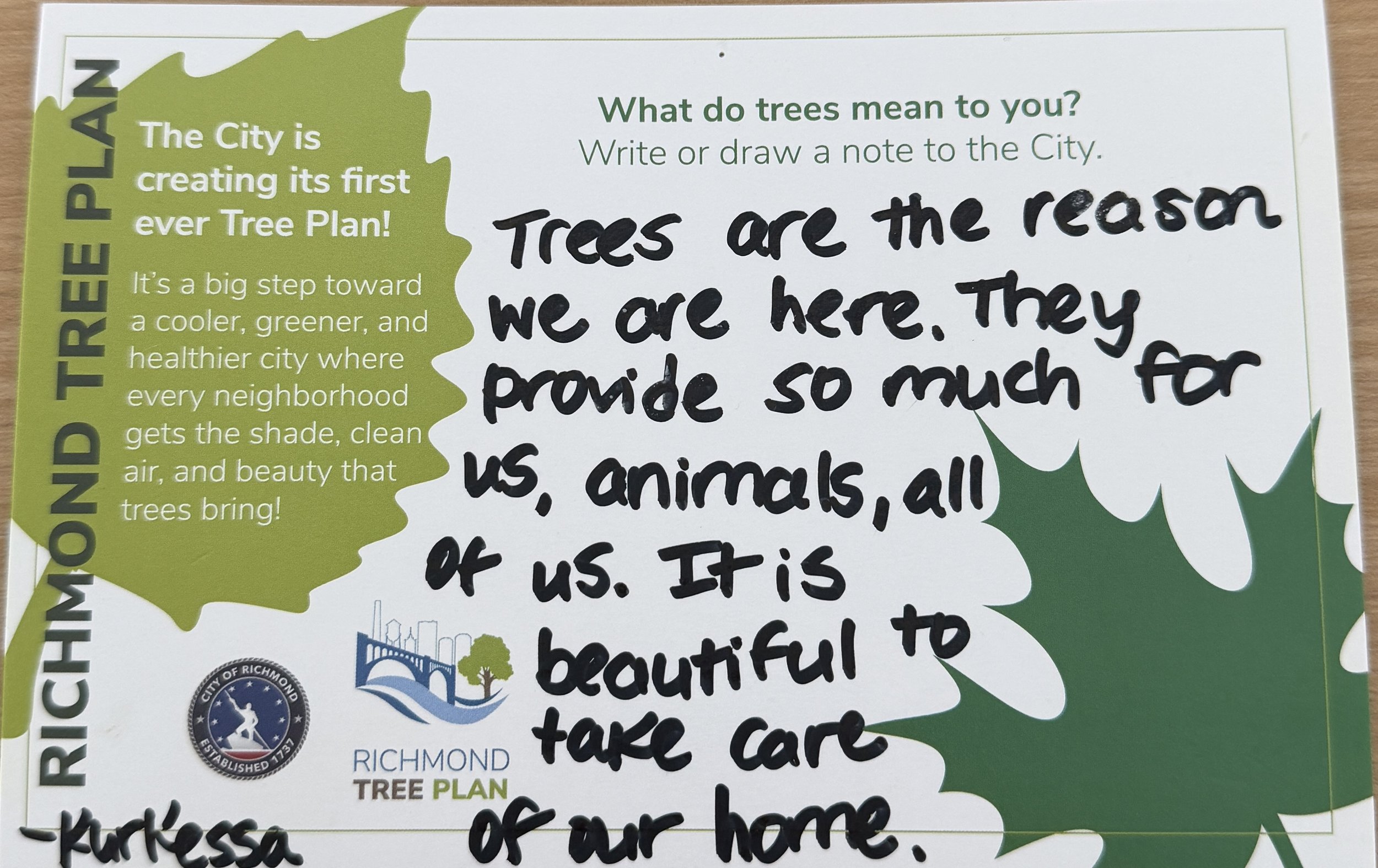
“Trees are the reason we are here. They provide so much for us, animals, all of us. It is beautiful to take care of our home.” — Kurkessa
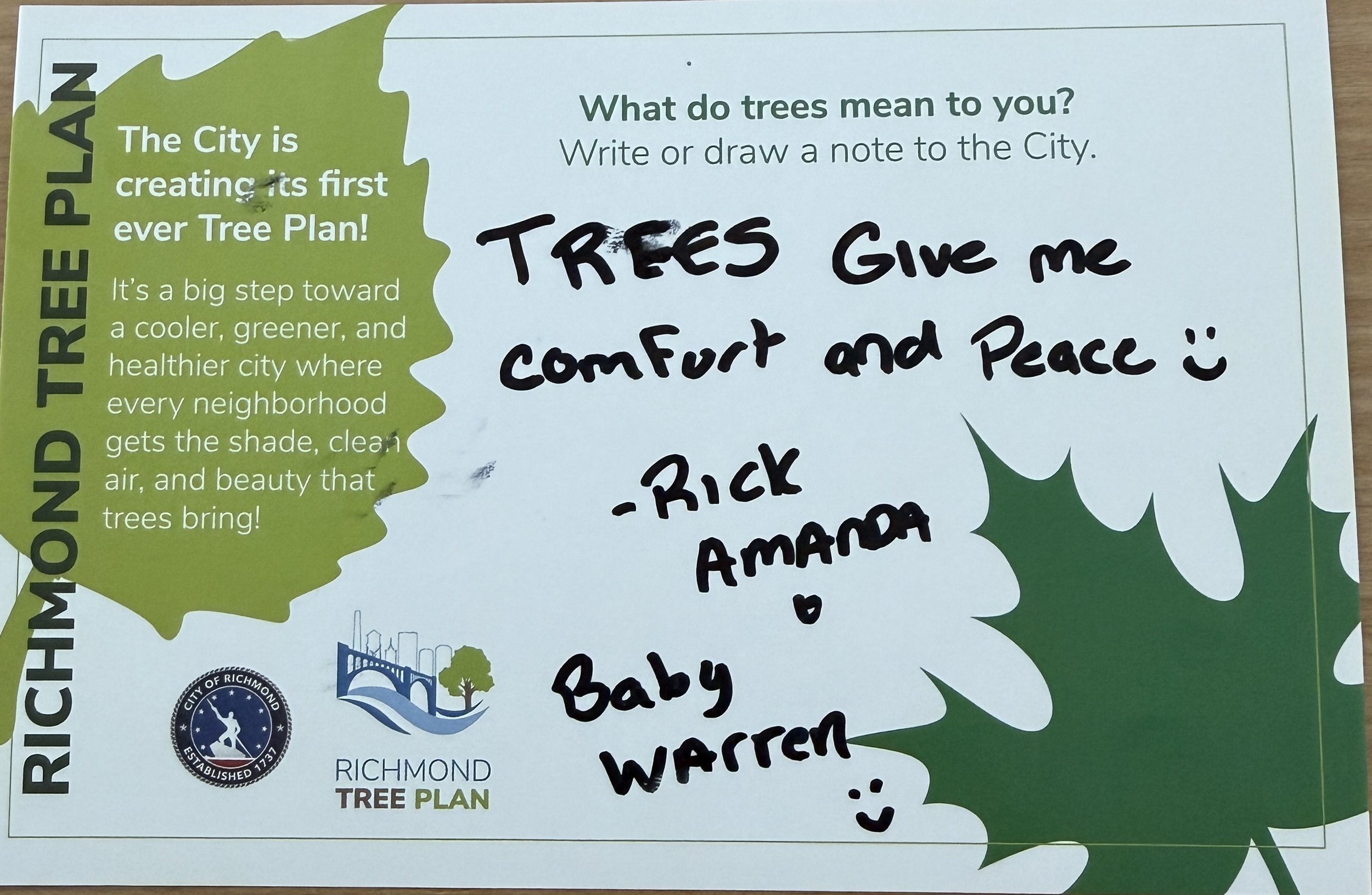
“Trees give me comfort and peace :)” — Rick, Amanda + Baby Warren
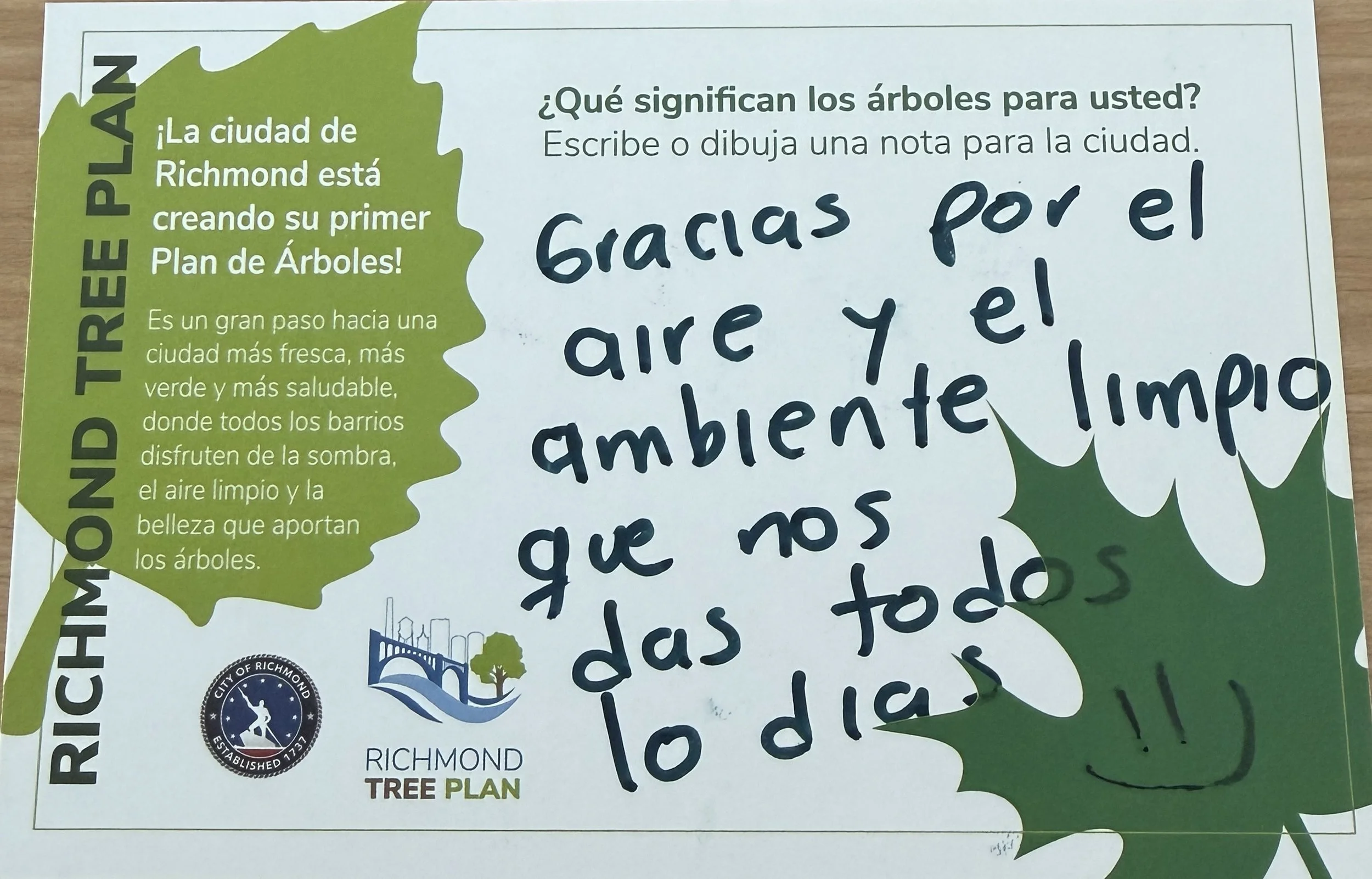
“Gracias por el aire y el ambiente limpio que nos das todos lo días” Thank you for the air and clean environment you give us every day.
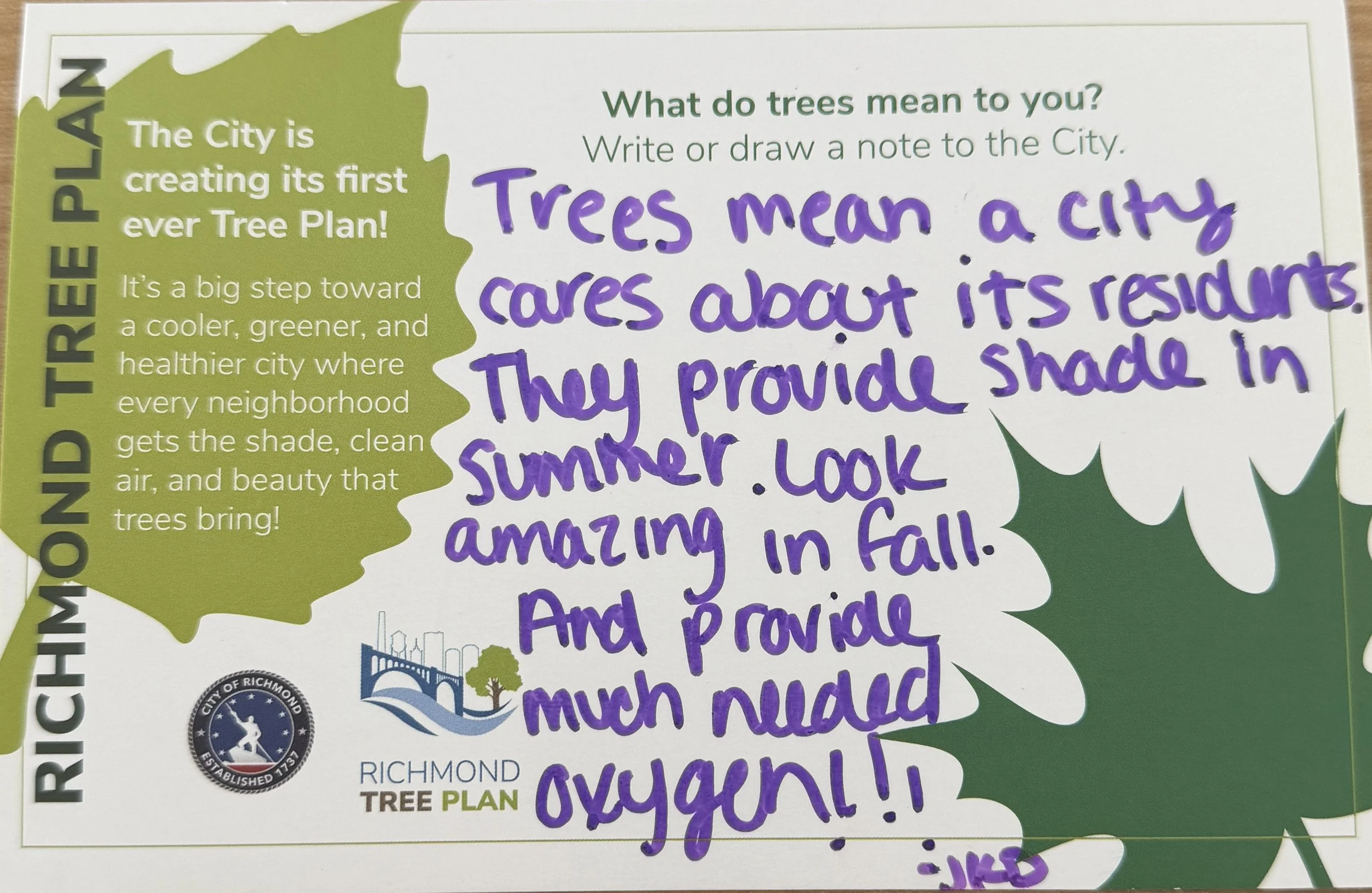
“Trees mean a city cares about its residents. They provide shade in summer. Look amazing in fall. And provide much needed oxygen!!!” — JKD
These early conversations are helping shape the plan’s Community Engagement Strategy. As the project continues, findings from the canopy assessment (expected later this summer) will help guide future outreach and planning priorities.
Help Cool the City, Now!
A key component of this process is the Cool the City campaign, a citywide effort to create greener and healthier futures in Richmond’s neighborhoods that need them most. So far, we’ve planted nearly 600 trees and shrubs in high-heat neighborhoods, engaged over 500 community members, and created five new green jobs! We are planting and giving away THOUSANDS of trees, building tomorrow’s workforce, and increasing the City of Richmond and its nonprofit partners' capacity to deliver lasting change.
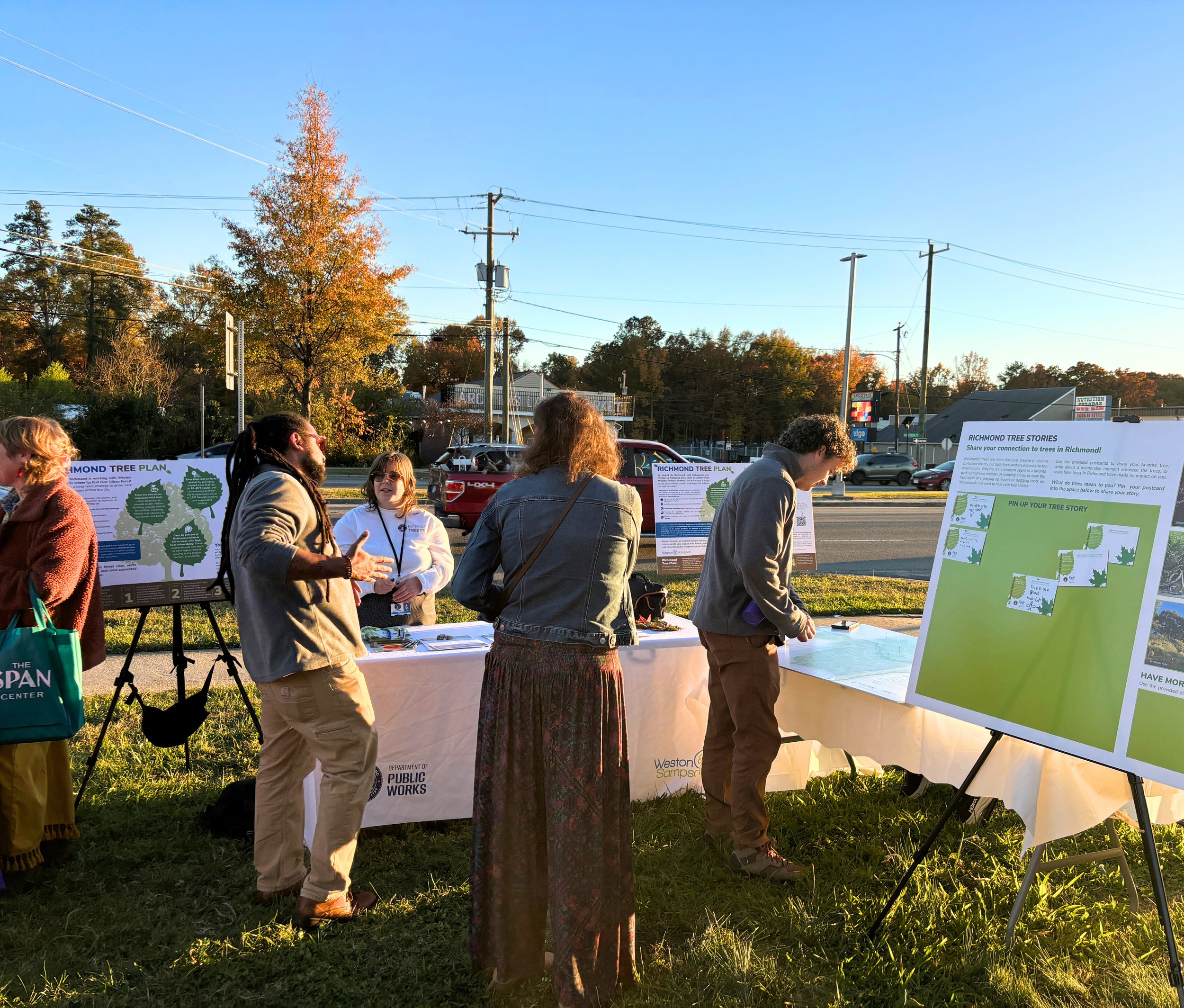
Richmond Tree Plan tabling at the Cool the City coalition’s Richmond Tree Week “Crafternoon” event at Abuelita’s on November 5, 2025. Photograph by Erin Herock, Weston & Sampson.
The campaign’s coalition includes four community-based organizations: Southside ReLeaf, Happily Natural, Virginia Interfaith Power & Light, and Groundwork RVA, along with three City departments: Office of Sustainability, Parks, Recreation, and Community Facilities, and UFD. Both Cool the City and the Richmond Tree Plan are supported by a $6 million grant from the U.S. Department of Agriculture Forest Service awarded to the City of Richmond in 2024.
Richmond is fortunate to have a wide network of organizations working to protect and expand the city’s urban forest. These community partners, and many others, are helping build the momentum needed to grow Richmond’s tree canopy while ensuring community voices remain central to the process.
You can follow the Cool the City campaign on Instagram to find volunteer tree plantings, neighborhood greening projects, and opportunities to help care for Richmond’s growing urban forest.
Shaping the Future of Richmond’s Urban Forest
The Richmond Tree Plan is a collaborative effort to develop a data-driven and community-informed strategy to serve Richmond for decades to come. Your input will shape a plan that reflects the needs and values of Richmond’s diverse communities. After all, this is Richmond’s urban forest — and your voice helps it grow.
Join the conversation and share your ideas at an upcoming community event during Earth Month:
Science Museum of Virginia Earth Day Festival | April 18 | 12 - 5 p.m. | Science Museum of Virginia
City of Richmond Neighborhood & Civic Association Summit | April 20 | 5:30 - 7:30 p.m. | Main Street Station
Editor’s Note
The Chesapeake Tree Canopy Network provides data on tree cover change for all localities in the Chesapeake Bay watershed. While Richmond gained 128 acres of tree cover from 2014 to 2021, we also lost 327 acres of tree cover due to developed or developing land. What that means is that the city’s growth and development, driven by human activity, are outpacing the number of trees we’re planting.
While planting trees is necessary for urban forest health, the benefits we will enjoy from these young trees may take 10-15 years to materialize. Mature, healthy trees provide significantly greater benefits than newly planted trees. It’s important that our zoning code, land use policies, and city budget reflect the importance of preserving existing tree cover while also finding ways to plant and grow new trees.
View a fact sheet on the City of Richmond's tree cover status and change.
You can also discover your neighborhood’s Tree Equity Score to identify opportunities to improve health and well-being.
Funding for this project is provided by the U.S. Department of Agriculture, Forest Service, in partnership with the City of Richmond. This institution is an equal opportunity provider.